Not really planned, but since we were in the north of Poland, we decided to visit the 3 Baltic countries as well. We were curious, since we don’t hear much about these countries and they are not top tourist destinations.
When passing the border of Poland into Lithuania, we first were impressed by the number of big truck we encountered driving in the direction of Poland. At least a sign of some big economic activity. Driving more or less around Kaliningrad, we drove through forest areas, small farm fields with old wooden farm houses. Though not all in a good shape, still colorful. Since we started our trip at the early beginning of spring, we started to see the change of colors in the landscape as well. Little green dots on the branches of trees were giving a fresh look of our surroundings. The process of change from winter to spring, was something we hadn’t seen for a long time and it was a delightful experience. It works very positively on one’s mood.
We realized during our drive to the Baltic coast (we were actually continuing our Baltic road trip, but had to go around Kaliningrad first), how sparsely populated the country side was. A lot of the old farm houses we saw were abandoned (or at least gave that impression), a sight we also encountered in Latvia and Estonia. Most of the younger people leave for the few big cities, where there are more opportunities.
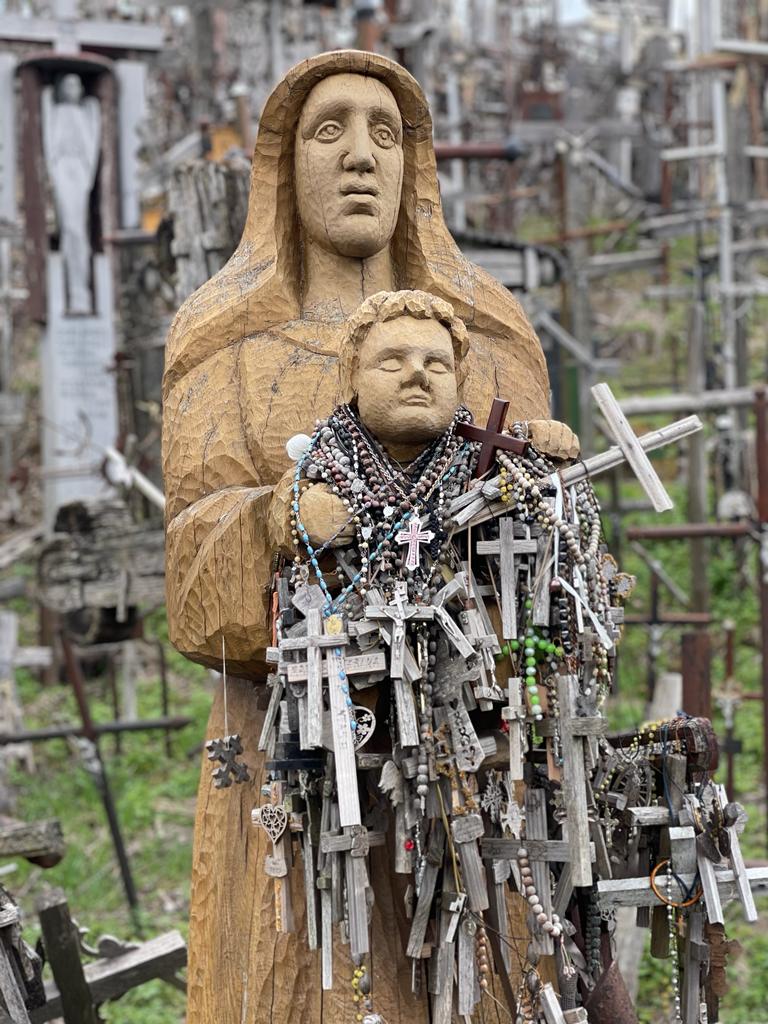
On our way to the coast we made a little de-tour towards the Hill of Crosses (Siaullai). Its a unique place, actually one of a kind. Even for those who are not religious or Christian, the sight of over 100.000 Crosses of all seizes and fabric, from pelgrims from all over the world, on a small hill, is stunning. The Crosses all have an individual meaning for each person who planted his or her cross here. Both spiritual and encouraging, the hill gives people courage to believe and fight for freedom. For Lithuanians it a place of peace and remembrance for those fallen for the freedom of Lithuania.
At the end of the day we arrived at the small harbor town of Klapeida, where we found a nice little camp site (which was officially not open yet), but the lady owner was happy to accommodate us (you won’t receive guests from Sint Maarten everyday).
At Klapeide we took a ferry with our bicycles to the Curonian ”Spit”. Its a peninsula which is connected to mainland Kaliningrad, but shared with Lithuania. Its mostly covered by a national park (both Russian and Lithuanian). Its home to the largest drifting sand dunes in Europe and about 20 million birds use the spit as breeding or resting area. We rode the peninsula up and down, on its only road, through the forest and the dunes. Being so early in the season, we almost “owned“ the peninsula. Again we could catch a glim of the Russian territory at the end of the road. Catching the last ferry back to town and from there to camp. A bit frozen we reached home base. Praise our Bliss truck with its excellent heating systems.

Regular maintenance and cleaning is also part of ”camper-life” especially when traveling for a longer periode. So we used the next day, to do the house hold cleaning.
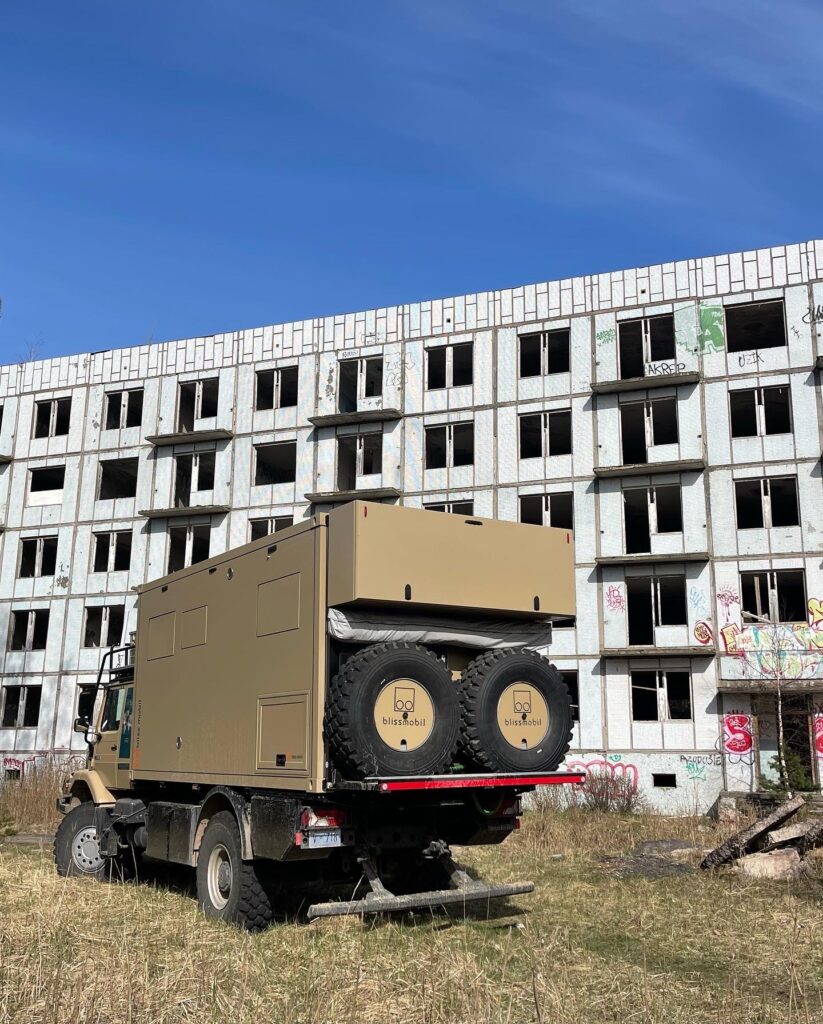
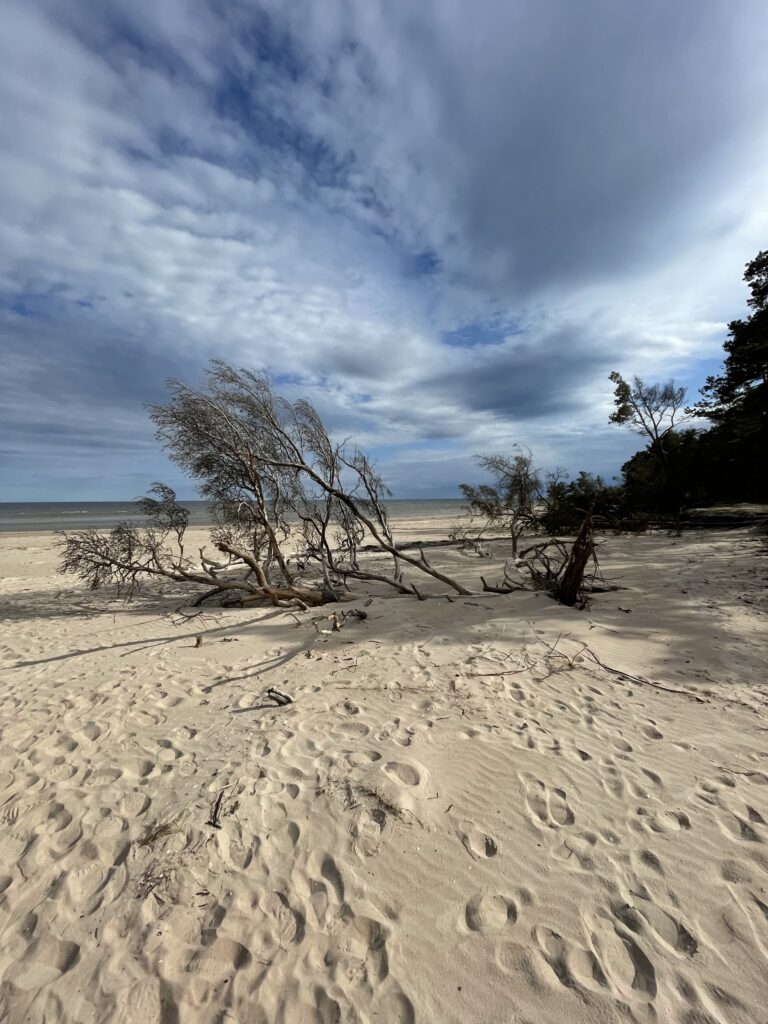
Continuing our trip along the coast Into Latvia, we entered an interesting area, which was during the Soviet occupation a military zone and off limits for the local population. The only good thing of this, was that the area remained forested and undeveloped for all those years., hence it became a national park (Sliteres National Park). A big town consisting of the typical Soviet apartment blocks (zero architectural fantasy), lay abandoned, like the soldiers left a few weeks ago. Along the coast, bunkers and watch towers, guarding the Baltic Sea where ”they“ expected the West would attack. We stumbled upon a small settlement, which provide ”silence meditation”. Well silent it was. The inhabitants even wondered how we were able to find this place… Miles and miles of sandy beaches, birds, seals and abandoned military installations. And again we were there only by ourselves. We found some great spots in the forest near the beach to camp. Having a lunch or diner within one of the old Russian military camps, gave us a weird feeling. Knowing that in our younger lives, soldiers were doing the same, while waiting for the westerns to arrive. Now it was all peace in this part of the world.

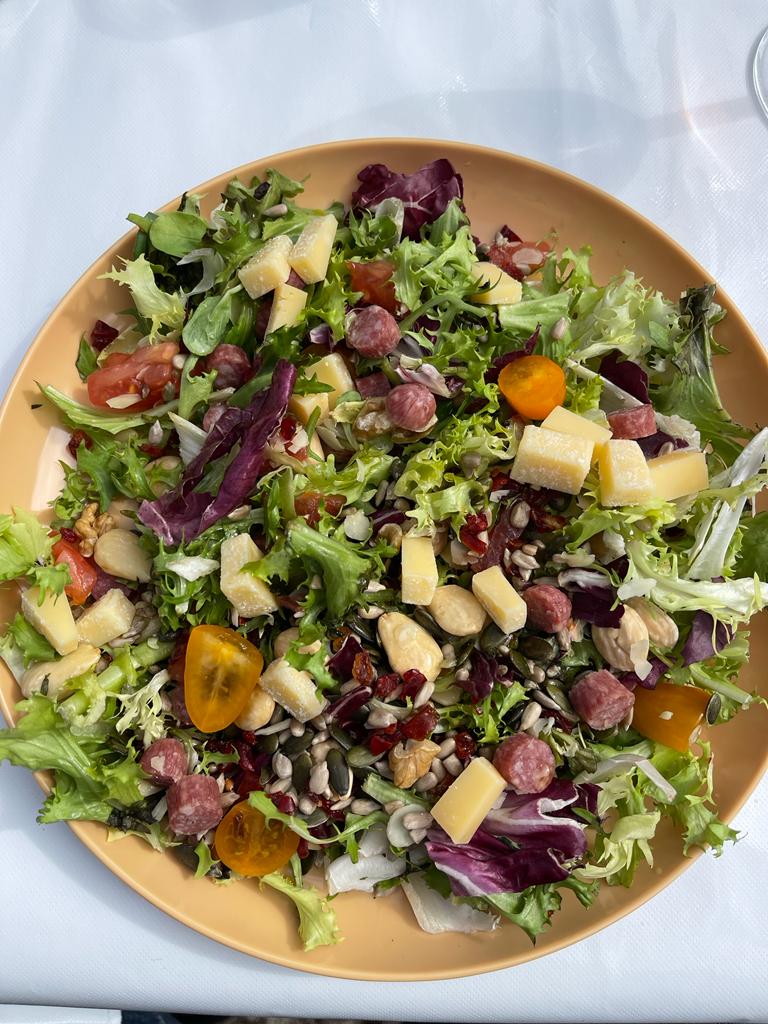
Leaving the forests, we rounded Cape Kolka (Latvia’s most north/western point). Driving through small fishing villages, on our way to the capital of Latvia Riga. First day we had some serious rain, so a good day to drive. We stopped In Kemeru National Park, despite the weather, we set up a nice pick-nick site near a lake. A little inside on our traveling cuisine. Prior to our start of the journey we purchased a huge load of different fresh nuts and seeds. Our lunches usually consist of a very varied salad with fresh lettuce, nuts and seeds, home made dressing, cheese, tomato, olives and whatever we can find in fresh produce. Eating healthy during a long journey is a must for us. Besides that, salad lunches are easy and fast to prepare and don’t need energy resources.
In the afternoon we entered the outskirts of Riga and had contacted a little camp site near the river. We were warned by the owner that the roads towards the site were narrow and the street corners were tight. As long as we were not longer than 11 meters, it would not be a problem. Well first our navigation system (which has the seizes and weight of our truck in the program), brought us to a railway bridge on a narrow road. Problem, we are 3,85 and the maximum hight for vehicles to pass was 2.85!! Luckily we are always alert when nearing bridges and tunnels, so we noticed in time. So now we had to back up with cars behind us. So much fun and faces looking at us…..(you dont need to speak Latvian to understand what those facial expressions meant). We found an alternative road and entered the area of the campsite. And indeed very, very narrow, but we made it till the entrance of the ”camp site”. A man came running towards us, waiving his arms and screaming a lot of words we had no idea what it was about. It was the owner of the site and he almost got a heart attack when he saw us coming. The ”camp site” turned out to be his pretty neat green lawn (like a billiard table), which he saw plowed up like a farm field once our tires would roll over it. We assumed not many expedition trucks has ever visited his site (and maybe he even never saw one before), so, again we had to back out through the small street, finding another spot.
And here again (since we wanted to visit the old center of Riga), we found a city camper parking/camping. An industrial area combined with a small marina was the place. When summer comes, boats get back in the water, clearing up space where in the summer campervans can park. Excellent idea. We had a ”front row seat” on the Dvina river with a great view on the sky-line of Riga. Still cold and icy winds, but it enhances the experiences of visiting the Baltics.

Next morning we lowered our bike-carrier lift (again another great feature of our Bliss unit), to get out the bicycles. Though we have to partly dissemble our bicycles every time in order to be able to store them in the large storage compartment above the 2 spare tires on the lift, we were getting more and more trained in the process. Assembling time was down to 20 minutes.
Discovering the second town (first capital town), on our trip, we took off for a 20 minute ride to the town center. We realized (same as in Gdansk) biking (especially in towns) is not so far developed as in The Netherlands. Bicycling infra structure is a patch work of paint on roads, side walks, here and there a sign. But when cycling, pedestrians and cars are accepting the cyclist, where ever they ride in what ever direction. A great help are the hundreds of delivery people riding their bicycles up and down the streets and walkways with their big square carrying bags on their bags. They are so common now and accepted. And if it is not them, it are the hundreds or thousands of electric steps you find in almost every city we have visited so far. Bolt (an Estonian company) is a leader in these parts of the world. Pretty fast the streets are starting to look different. Like being electrified.
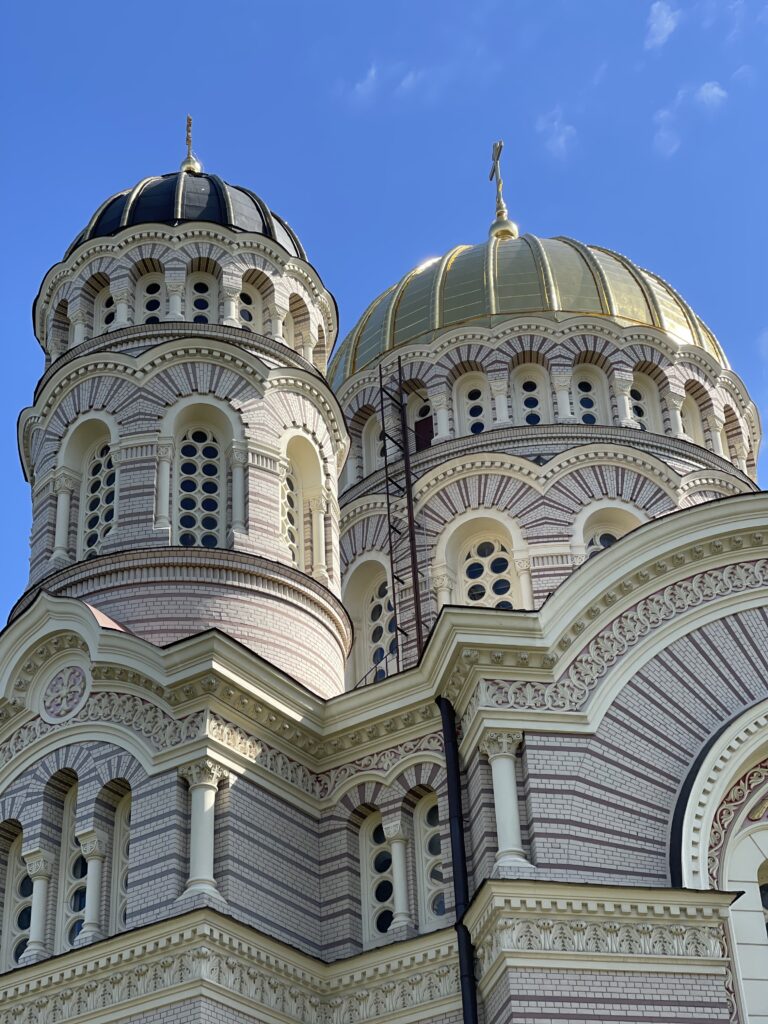
Riga has a beautiful Unesco listed old town with churches and buildings from the middle ages, but Riga is also famous for its wooden architecture (beautiful wooden villas from the Prussian and Russian Empire periods), and the Art Nouveau district. Famous is the Blackhead house of the Brotherhood of Blackheads. The Brotherhood goes back to the 1300, and was an association of unmarried male merchants and shipowners. Their patron Saint is (“is”, because the Brotherhood still exist), the black Egyptian Christian Saint Maurice. Mind you we go back to early 1300!


Riga also has a very interesting market place. Five old abandoned German zeppelin hangars from the 1920ies were re-used and adjusted to house the most modern and largest market in Europe. Till today its an amazing site to visit. Its nice to see, that so many small farmers (there a lot of small scale farmers in Latvia), can sell theIr harvest in a market like this and that fresh food products are an important part of the Latvian kitchen.

Riding through Riga we noticed the many, many Ukrainian flags. The Baltic countries are very much aware of what the Russian regime is capable of. (Though not only the Russians, the Baltics have been a battle ground for centuries. Danes, Swedish, Finish, Germans and Polish all fought their wars with each other or the indigenous people, about who would control the lands). Latvia only now enjoys its longest peaceful independence (since 1991) and they have the right to be a bit nervous (to say the least) and be openly very supportive to the Ukrainian people.
After 3 nights at the shores of the Dvina river, we left towards Estonia. First we were advised to stop at a large open air museum where Latvia has assembled many historic buildings from throughout the country, saved from demolition and decay. It was a national holiday, so it was busy with Latvian families, but nice to roam around with the locals. And indeed the museum had a very interesting collection of buildings whiich were well displayed. The Latvian Ethnographic Open Air Museum is one the oldest and largest open air museums in Europe.

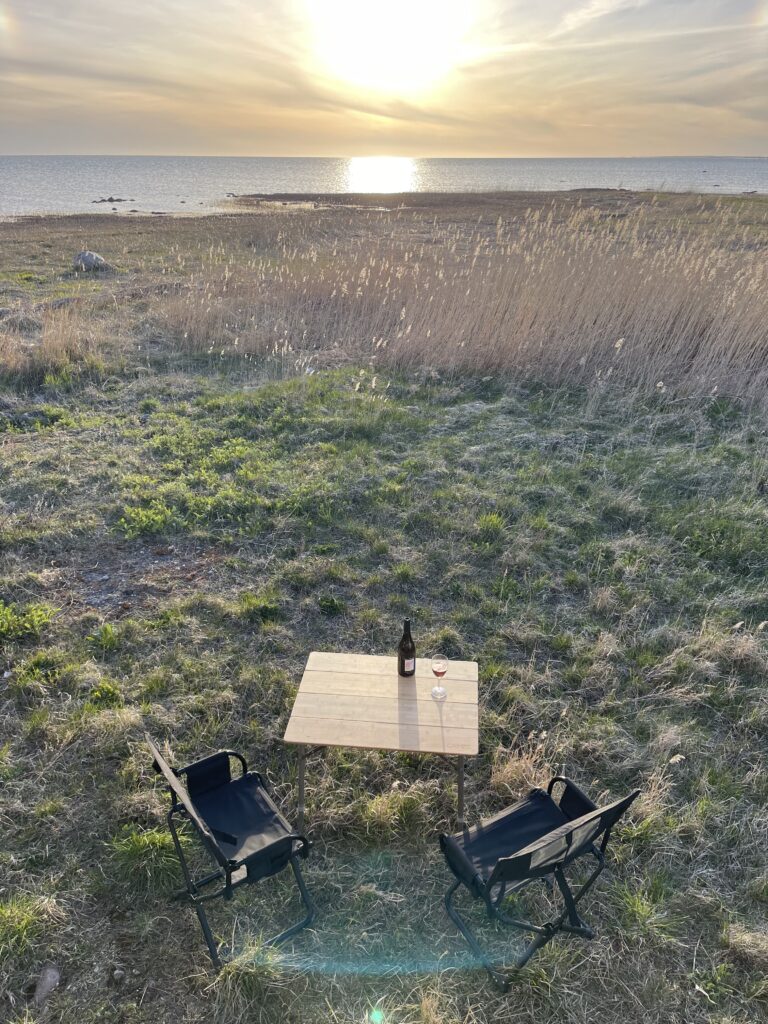
Crossing the border with Estonia in the afternoon. Estonia is different from Latvia and Lithuania. Being more to the north it has strong ties with Finland (2,5 hour ferry ride from Helsinki). The Estonians use a different language group and have a very down to earth easy going attitude. They love their outdoors. Estonia is also the least populated country of the 3 Baltic states. Estonia is like the other 2 countries heavily forested. The coast is the most scenic of the 3 countries with its rough coastline, over 2000 islands and cliffs. We parked that night at a small ferry harbor near one of the islands. Amazing sunset and very active bird life. Talking about birds. I already mentioned about our enjoyment of the developing spring time. The longer we travel, the greener the trees and bushes are becoming. But also the thousands of old fruit trees (especially those near the old wooden farmhouses), with theIr blossoms offer us their best look. Its like life is re-born. Comparable with the start of the rain season in Africa, where everything comes to life again. The circle of life in its best form. White Storks, on top of their nests (nests on top of poles, chimneys, towers ect), attending their eggs or now feeding their young), we found them everywhere along around, since we started in Poland. They are a sign of the arrival of springtime. These majestic birds who’s presence between human settlements is eye catching and bring joy to those who admire the change of the seasons. Poland is home to 25% of the worlds White Stork population during the breeding time. Following the Baltic coast, the skies are full of migrating birds. No matter what happens, pandemics, wars, nature follows its own rhythm.

The largest island of Estonia is Saaremaa. Another example of staying green and undeveloped because of Russian military occupation. Large ferry boats ferry cars and trucks between the mainland and the island. During summer time its a major (domestic) tourist destination. The north west part of the island has many beautiful natural areas, part of the national park Vilsandi. Remote, rough, full of wildlife. We made a number of great hikes encountering deer, foxes and wild boar. Even the foxes where taken by surprise when seeing us, as if they never had seen humans. Forces of nature are clearly at work when seeing the shifting sandy coast line of the island, whereby lighthouses once standing on the land are now located in the sea. But despite nature‘s power, people are creative, adaptive and resilient. One of the most remote islands of Estonia with a few inhabitants (a little more east of Saaremaa) is either accessible by car, but only on a trailer pulled by an enormous tractor, which drives to a partly submerged, swampy road or by a small boat. Remember Malbrok castle in Poland of the Teutonic Knights? They even had a castle built on this remote island, all in the name of bringing civilization and Christianity. The Teutonic Knights still exist like the Malteser knights, though they are now humanitarian organizations.


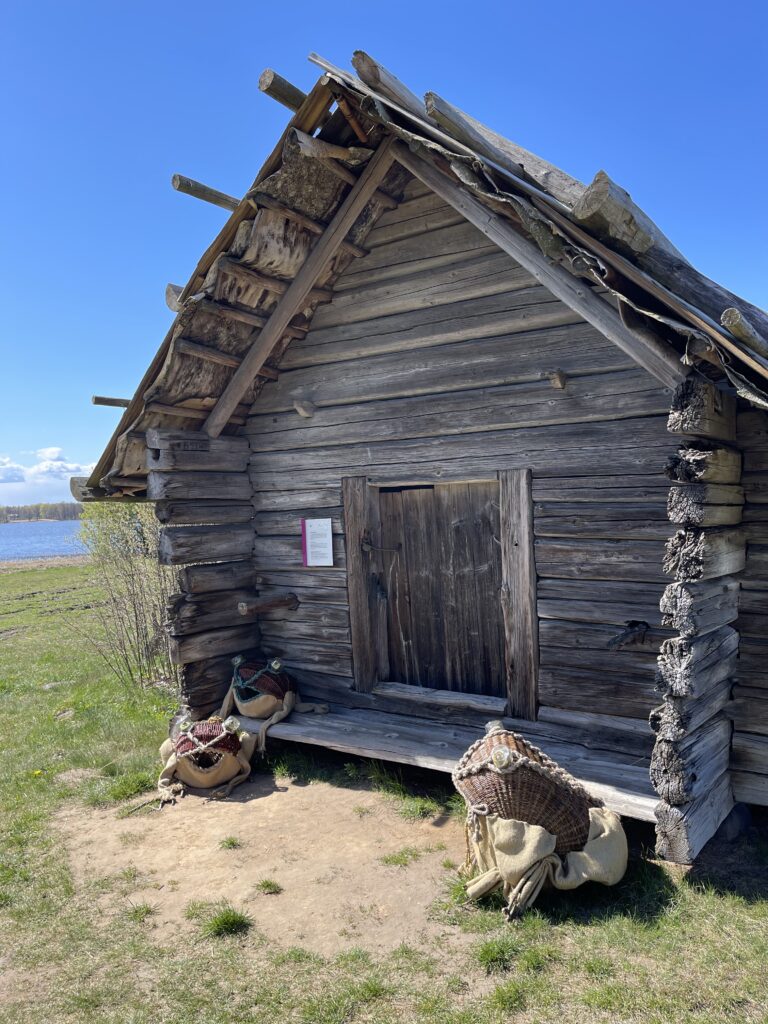
On our way back to the ferry we made a stop at one of these old abandoned farm houses. Often you see that the roof collapsed (its all wood, it can snow heavily and termites do a good job as well). In some of these houses, it looks like the inhabitants left in a hurry and in some cases it was. This particular one had the Russian coffee still on the kitchen table (though with a nice layer of dust). Old coats with spiders were still hanging in the hallway. You really try to imagine what the story behind all this is. Especially the fact that the history of the Baltic countries is full of relocation of people, voluntary or often forcefully by new rulers.

We took the ferry (amazing state of the art vessel, super clean and nice restaurant) back to the main land, with the focus on the next capital city, Tallin.
Upon arrival on the main land, we continued our journey and past an (again) abandoned building. This time a huge mansion. The Baltic countries are littered with mansions (manors as they call them here). They are relics of a time that most of the arable land was owned by a few rich big land owners. The ordinairy people were almost enslaved by the land owner elite, working for little money and living in bad conditions. Some of these manors are like palaces and whole villages were built around them, serving the manor and its inhabitants and depending on these manors as well.


The German Baltic nobility who built and owned these majestic buildings, suffered under the Russian Bolsjewiek revolution. Many manors were burned down. After the WWI, Estonia gained its first independence in 1918 and with the Land Reform initiated by the new state, the big land owners, lost all their lands and manors. Some manors which were suitable, became schools or apartments. Others were just left to deteriorate. The Russian occupations were even worse for the manors. Seeing them as evil symbols of a capitalist and imperial system, further destruction occurred. By now, almost all Baltic Germans also had left the country (same as for the other 2 Baltic countries).
Since the end of the Russian occupation and the restoration of the independence, interest and appreciation of the manor has grown. They are an integral part of history of the Baltic countries and they, with their owners, traditions and culture paved the way to an European identity.

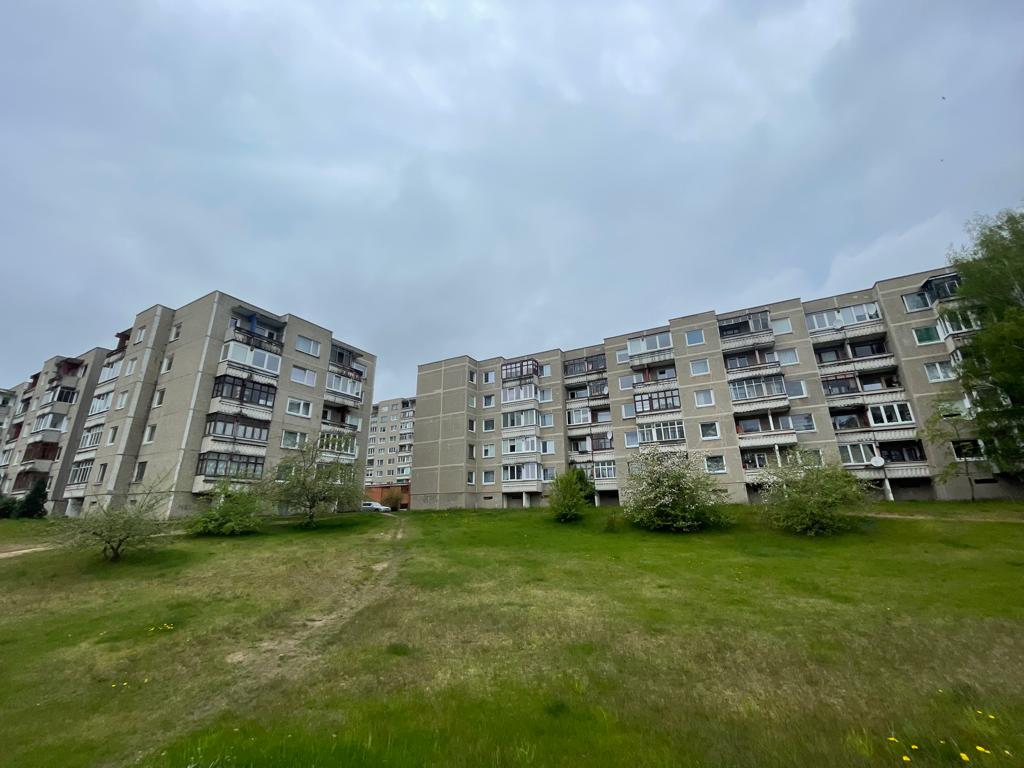
The former Russian occupation remains strongly visible in Baltic society. Russian is still the second language in the 3 countries and there are large ethnic majorities in some areas. In some areas and towns Russian and/or Russians is/are a majority. The typical concrete apartment blocks (one size fits all design) are visible everywhere, even in small country villages you can find a block or two which were built for workers on state farms and factories. Some of them have been renovated or received a colorful paint job, to look at least more appealing.
But also the lives and culture of the Estonians is full of memories of the Russian occupation. For years after the end of WW2, the Baltic countries fought against the Russians in a tough Partizan war. While the West enjoyed freedom and re-building, the East European countries suffered another 45 years of occupation. The countries are full of monuments for fallen Partizans and even their hide outs in forests are sacred sites. Speaking with older Estonians, they remember the days and are fearful of the current events.

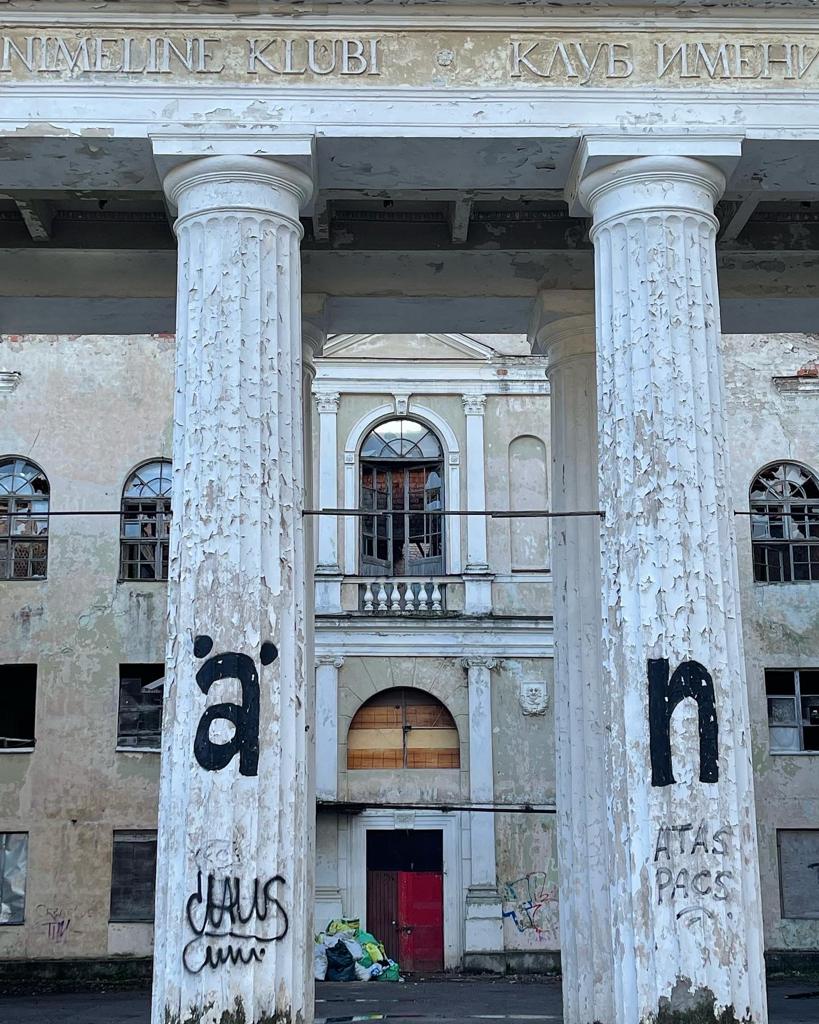
A large ”unofficial” monument is the former Soviet Nuclear Submarine training center in Paldiski. A huge building housing 2 mock nuclear submarines with real nuclear reactors. It was the largest of its kind in the entire Soviet Union. An entire town of 16000 people was built in the time to service the center. Again a lot of concrete blocks!. Even today most of the inhabitants are of Russian descent. After the Russian forces left, the Estonians were left to clean up the nuclear waste. The actual decommissioning of the 2 reactors can only start in 2039 (because of the radioactivity), which is almost 50 years after the Russians left. Estimated cost of the entire process could run into 2 billion euro’s. Since we read something about a tour or exhibition about the center, we tried to locate it and visit it. We reported at the main entrance and knocked on the door. A security guard came out all stressed and waiving arms, like get away. We asked him about the museum. Museum???, No no no no, this is top secured site, radio active, dangerous ect. So we understood our presence was not appreciated. We tried at least and saw the building from the outside (btw, in Estonia the building is known as the ”Soviet Pentagon”)
After our failed attempt, we decided to continue towards Tallin. Like the previous 2 cities, we arrived in Tallin on Sunday. We like that, since there is less traffic and lowers the risk of being caught violating the no truck signs. Because, again also Talling had our favorite traffic sign all over the city, especially the route to our next camp site. The next site was again a city camper camping/parking. This time the Tallinn Olympic Yachting Center. Tallinn held the Sailing Olympics in 1980, when Estonia was still part of the USSR. The Soviets made enormous investment in the city, which changed Tallinn a lot. A big airport, big TV tower, hotels, stadiums and a large port terminal were built. Over a period of 5 years, millions were invested in the city and its infrastructure. However, due to the USSR invasion in Afghanistan in 1979, a total of 66 countries boycotted these games, so it was a bit quiet in Tallinn during the games.


An interesting place to be, once you know the background and with spring in full swing, a rather active location with sailors come and go. It had a bit of a Caribbean feeling (with a lot of imagination though). Again we were only about 20 minutes away from the old town center, a nice ride along the paved sea shore of the Bay of Tallinn.
Tallinn is known for its well preserved middle age town centre. The many sections of walls around the old town and the watch towers part of it, all go back hundreds of years and as I said, all well preserved. They say Tallinn in winter (covered with snow), is the best place to get the Christmas feeling. And yes, I could imagine, the snow, the cobble stone streets, Christmas trees and markets……. Tallinn is also a major Baltic cruise destination, because of its historic old town. And yes, they are there again in full swing. 4 to 5 ships a day and big groups of people on the streets with their wristbands or badges being targeted by hustlers and barkers to buy or eat something, not my thing. (See that enough throughout the Caribbean).


But Tallinn is not only about its touristic old town center. Tallinn is a reflection of the innovative and independent spirit of the Estonian people. ”If we can’t get it, we make it” is often heard. The Baltic countries (especially Estonia and Lithuania) are known for their tech development. Many famous tech companies started as start-ups in these small countries (Like Skype). In Estonia, having access to internet is even considered a human right. Modern apartment and office buildings, line the street around the old town and actually the new blends in with the old pretty good.
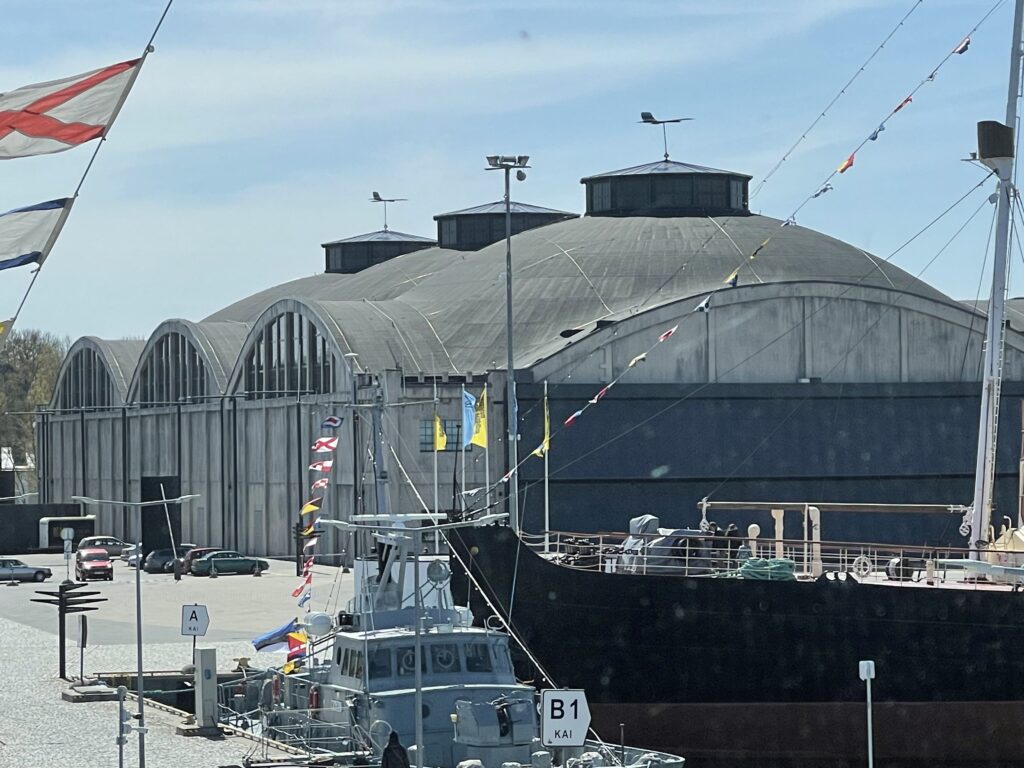
Like Riga, also Tallinn has a unique complex, of which buildings go back to the times of the Russian Tsar Peter The Great (1917/18). The old seaplane harbor of Tallinn (Lennusadam), is again an eye catching site. Built to house and service sea-planes for the Russian Tsar‘s military forces. It was a unique and revolutionary construction methode for that time. The first concrete/steel shell construction of that size in the world. Though hardly used and left to decay for decades, the Estonian Government saved it from complete demolition and was able the completely restore it. Nowadays its the second largest attraction in the country, in use as maritime museum. The museum itself is a master piece of ”interior designing”. With as center piece a famous old restored sub-marine, it gives – in an interactive way – a good view of the maritime history of Estonia.
Next to the sea plane harbor, are the old barracks part of the sea fortress (of which the sea plane harbor was a part), built as part of the defense system built by Tsar Peter The Great. It was the time of growing tensions between the Russian Empire and the German Empire. The fortress never saw real action during WW1 and in 1918 it was taken over by the new independent country of Estonia. From that time it became one of the most horrific prisons in the former USSR. The Estonians, Russians, Germans they all used it as prison and execution grounds. The Germans locked up the Russian when they were in charge and the Russians locked up Germans when they were in charge. (Its tough to be on the right side those days). Also Jews from France were brought here, just to be murdered. The Patarei prison complex was in use until 2002 and going through the building, which is left as is where is since 2002 and received hardly any modification, modernization or renovation since its original opening, its hard to describe or even to imagine how life must have been inside these walls.


Seeing the reminders of the past, its promising and joyful to look at the predications of the future. Riding around the areas, not well visited by the tourists (especially the cruise ship ones), we saw how the old industrial complexes along Tallinns Baltic shores are being demolished or transferred into trendy contemporary condos. Often you see that the chimneys (once throwing out black smoke from the steam turbines), are kept as reminder of Tallinns industrial past. Then there is the Telliskivi Creative City, another former industrial area (Soviet era train locomotive repair complex), where the young generation of Estonia can feel unshackled and express and develop their innovative ideas. It reminds me a bit of Soho or the Meatdistrict in New York before big real estate came in. It feels like a hippie place, but its the free spirit of the minds, the disconnection from the regulated world, what helps to transform the world into a better place.


Finishing our stay at Tallinn with a positive vibe, we spent a last night at the Olympic Sailing Center. Though quite self-sufficient, we also have to do a pit-stop once in a while. On average we need to find a ”service point” once in 2 weeks to fill up with fresh water, empty the grey and black water tanks and do some laundry. We do have a small washing machine, but we keep that as backup, in case there really is no other option. Luckily, for electricity we don’t need external power supply. Our solar system and lithium batteries, give us power 24/7.
Another unique place (for what it was and is, but also its scenery), is the Rummu quarry. Also one of these places you won’t find in the regular tourist guides. A closed limestone and marble quarry, which was in use as a hard labor camp for prisoners during the Soviet time. Though closed and not accessible by car, we were lucky when a service truck entered through the gate and we just followed and then diverted straight to what is was all about. A scenery from another planet, is best to describe it. Overtime the quarry (like an open mining pit) has been filled up with rain and ground water, and due to the light color of the bottom, the water has an almost turquoise color. If you would say its a Caribbean beach, I would believe it. A mountain of excavation material from the quarry near the newly formed lake, has been transformed into one of the most interesting mountain slopes I have ever seen. Formed by erosion caused by rainwater, several pointy ridges raising up from bottom to top. Together with submerged former mining buildings and machines, the site has been transformed by nature itself, from a place of pain and suffering, to a paradise, were people engage in a variety of activities. From swimming, kayaking, scuba diving to music festivals and film scenery. Its strange to see how a place can have such different functions and what a difference it makes in which time of history you live. We often don’t realize that!


We enjoyed one of our famous Wolo camper salades at the lake, catching some sun and seeing the birds fly over and through the partly submerged buildings. And again my mind was trying to picture those who with a pick and shovel, worked on the lime stone and nowadays the young kids enjoying their parties here during the summertime….
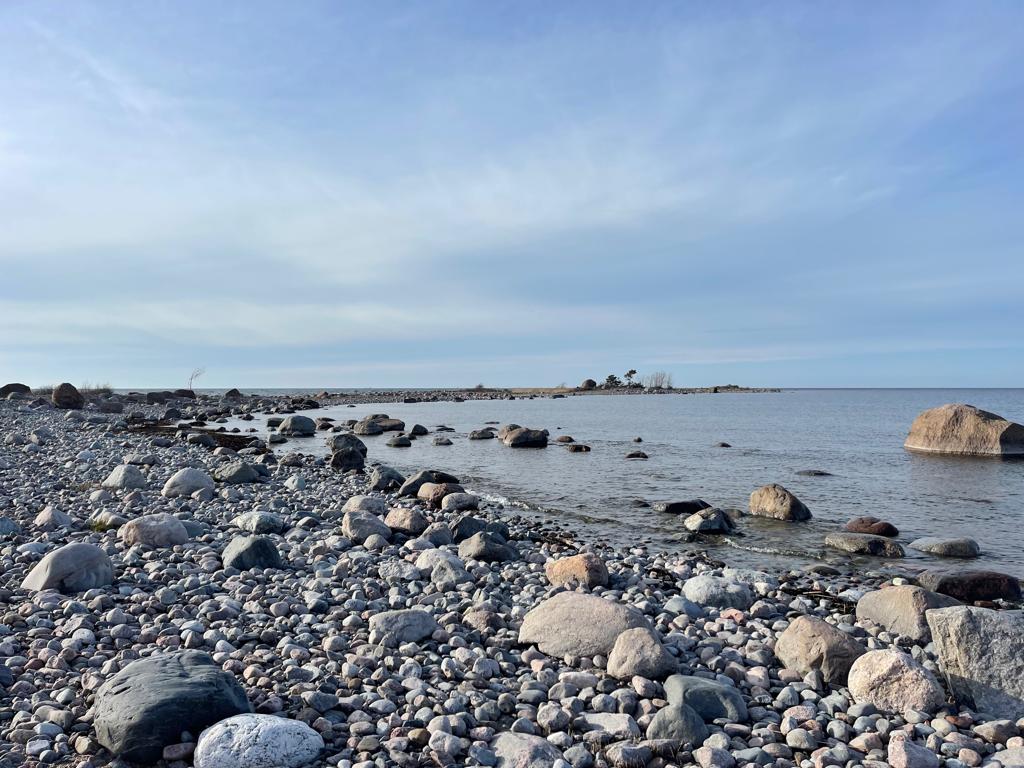
Reaching the most northern point (Accessible by vehicle) of the first leg of our around the world tour, was our next goal. Again we thought that we found the most beautiful place on earth. Part of Lahemaa National Park, this long rocky narrow peninsula (Purekkari neem), stretches out into the Baltic Sea. Little patches of green fields of grass, a little hill with a pine tree and a huge rock (remnant of the retreating ice age gletsjers), decorate this little paradise. The Lahemaa park is known for having the biggest erratics in Europe and maybe even the world. A too nice of a place to leave, we decided to set up camp and tried out our DJ mini drone. To catch the beauty of this area, only footage from above would do justice. And it did. Though a little more practicing with the drone will be needed to improve future shots.
As also this area (the park) was a former Soviet military area, lots of green and only little habitation. One of the prettiest little fishing villages (Altja) is located in this park and to see if the written words were reflecting the reality, we stopped by. Four little wooden buildings on a small headland. Romantic setting, but less then we expected. Still, here you also see the difference of the situation then and now. We see a picturesque place, romanticize living a simple life in a very basic cottage on the sea, catching some fish and live happily…….no, these little cabins, were houses where people lived and had to endure the perils of the sea to make a living, to survive. No social security, no supermarket, no, just what the sea and land gave. They were on their own together. To live that life, is almost impossible these days. At least for the modern human being.

Looking for extreme points we set course to the most eastern part of the country, the city of Narva. On our way there, we decided to make a random stop for a lunch. It was very rainy and we were not in the mood for a salade. We followed a sign towards a possible restaurant. Mind you, since entering Poland, none of the languages we came across we could read nor speak. Luckily there is Google translate and there are apps ”reading” sings and translate, but driving on a road, you not always have the possibility to stop and wait for the translation. Furthermore, most signs for interesting places are placed right at the junction. Anyway, we ended up at a fortified mansion from the Middle Ages (Purtse Castle) which could definitely use a good paint job. No indication that this would be a place to get a lunch. But there were cars on the parking and people were entering a small door, seemingly go into a cellar. Well do as they do. And indeed we ended up in a cellar from the middle ages, big rocky walls, massive wooden beams keeping the structure in place, nice and cozy, like you enter a movie scene. A large table with a big group was having a good looking lunch. But one thing seemed out of place. Heavy metal hard rock music came out of the speakers. Not the regular type of music when having lunch, but since nobody was complaining about it, we didnt want to be the odd ones out and accepted it as part of the ”Medival experience”. And boy, what did we eat! A type of fine dining we love and in a God knows where place (at least thats how it felt like). The chef (a big, bold, tattooed gentleman), turned out to be one of the best chefs of Estonia and works best when listening to heavy metal music and preferable everyone around him. And you know what, it had something and I think it will definitely help me to never forget this lunch. (Von Taube Restaurant).

Filled to the top, appreciating the experience, we went back on course going east. Narva is also not a top tourist destination, though its an interesting city for a couple of reasons. First of all its the most eastern city of Estonia, bordering directly on the Russian border. Its opposite the Russian town of Ivangorod. Only the Narva river divides the 2 cities. On both sides castles facing each other in close proximity (you could literarily throw a rock to the other side). Though Narva is an Estonian city, almost 90% of the inhabitants are Russian. Being completely destroyed during the last war, the city was re-built Soviet style…concrete apartment blocks. The border crossing in town is pretty active. People living on both sides of the river have a special visa, to visit the other side. We saw Russians coming from Russia, and Russians going back with big shopping bags. Due to the current situation, many items are hard to get in Russia or are expensive. We had our truck parked in the middle of the big parking in front of the Estonian border post. It reminded us of the border post between Zambia and Namibia were we lived and worked for 3 years. The transfrontier shopping, with (especially ladies) big bags, taxis and custom officers checking papers and the contents of the bags. What caught my eye was the number of women walking around with bright colored hair (and not all went to a certified French hairdresser, looking at the results).


It was at this parking (in semi-Russian territory) that the parking meter swallowed our credit card. Stupid of course, never stick your credit cards in machines with no cashier or attended nearby. The service or help line was only in Russian or Estonian language, nobody around us spoke English or wanted to assist. In the meantime you think this is a setup and some east European gangsters are emptying the bankaccount.
The only way to get help was to ask the police for help and they were located in the immigration processing area. So my best card was sent my blonde wife on a mission. To get to that area you had pass a big ”absolutely no entry” sign (we assumed that that was what is was saying, at least the sign picture was clear about that). While entering the area, an Estonian officer who was dealing with some Russians come into Estonia, suddenly noticed Marja nearing his booth. He dropped everything and used all his available tostesteron, to look as big and mean as possible, swinged open the door and marched with his big black shinny leather boots towards Marja (mind you, we have seen the most horrible prisons on the way to this place). Not realizing she was a tourist who didnt speak the local language, he started a whole tirade. Looking as blonde and innocent as possible, Marja was able to lower his tostesteron level and he realized that she really came for help. But first she was escorted out of the ”forbidden zone” and had to wait for an officer who could speak proper English. A nice young officer came and managed to to get out card back. End good all good.
Narva was once the first and only harbor of Russia, Trading ships from France, England and Holland, all came to this harbor to pick up merchandise. Narva once also had the largest cotton manufacturing mills in the world (Kreenholm Manufacturing Company). Located on an island in the Narva river a huge complex arrises. Using the rapids on both side of the island hydro power was used to power the mills. Over 12.000 people were employed on the island in the factory.
We left Narva the same day, we couldn’t find a good camp spot and had doubts about security. So we moved back westwards and found a great spot along the high cliffs along the Baltic Sea. We realized that it would be the last time for a while that we would see sea, since we decided to go south now.
Unknown to most people, but Estonia is the second largest shale-oil producer in the world, though only holds 1.1% of the world shale-oil reserves. Estonia is almost entirely independent from others for its energy needs and is the world leader in shale-oil technology. Shale oil in Estonia has been in use since the 18th century when it was discovered that certain soft stone could ”burn”. Its said that a sauna built from rocks, caught fire when heating up. Oil is trapped in stone, which is extracted by a certain process. The area west from Narva is littered with open mining pits (there are a few underground ones). We visited the Estonian Mining museum, which offers the possibility to go down in an underground mine with a former miner who shows you (still working) old Soviet mining drills and scrappers (very, very noisy, and you must keep a sharp eye on the ceiling…). It gives a clear picture of the working conditions of the miners and perils of working underground. No need for gyms those days! Digging, blasting dynamite, re-enforcing tunnels from collapsing risks and swallowing dust. What a difference these days, where now most labor is done with fingers on key-boards and preferably from home. Luckily its almost a thing of the past (at least in Estonia) and heavy machinery have replaced nearly all manual mining work.

The north east of Estonia, very interesting, very industrial and very Russian (they say its like the Donbas region of the Ukraine). But not the most happiest place to hang around, so south it will be. As we are going to our next destination we passed an enormous Russian Orthodox convent (Puhtitsa). It turns out to be the largest Orthodox community in the Baltics. We couldn’t believe that something like that could still exist in these time and in Europe. Perfectly maintained by the nuns who still live, work and pray within the convents grounds. They grow their own produce and do all what is needed to keep the convent in a good shape. Some of the nuns are in their nineties. The convent is an oasis of peace and serenity and survived during all the wars (sometimes the front of battle was almost at the entrance gate).

Next stop was the little village of Vasknarva, which lays at the start of the Narva river, which flows out of the biggest lake of Estonia and the fourth largest of Europe. Its divided between Estonia and Russia. A beautiful Orthodox Christian church is one of the main attractions here. Since we were very close (again) to the Russian border, we got intercepted by an unmarked van. Two heavily armed men in army style uniforms stepped out and asked the purpose of our presence in the area (while we were standing in front of a tourist information sign). They saw the numberplate and asked (in very, very English) if we were from Iceland.??? (They read Friendly Island on the plate, so a logical question and Marja is blonde, yeah, indeed we could be from Iceland). Tried to explain where Sint Maarten was and was questioned about Schengen. Well our passports are Schengen proof so that was out of the way. Now, about the purpose of our presence, well what about that nice church? Followed was a list of recommendations of other churches in Estonia (and there are a lot, I mean very lot of them). The border guards (thats was what they were) were satisfied and complimented us on the truck and moved on. The first test with authorities, we passed.


GEWELDIG !!! Wat een prachtig reisverslag. Voor ons is dit smullen. We volgen jullie niet alleen op een landkaart maar nu ook met het reisverslag. We blijven heel graag op de hoogte !
Veel liefs Berta en Marian.
Bedankt voor jullie reactie en leuk dat jullie ons volgen. Heb zojuist weer een vervolg geplaatst.