We left The Netherlands behind us and drove into Germany where we made a stop in Bremer Harbor. It was our first experience with a so called city camper parking/camping.Due to the rise in camper sales (especially during the Covid pandemic), parking a camper near or in cities became an issue. Its a growing group of tourists who also visit cities, but are usually unable to come due the parking or camping limitations near or in cities, hence the introduction of city camper parking/campings. Now I have to say, they do not all count on the arrival of huge expedition trucks. Eyes popping out and eye brows are frown, when we arrive. But most of the time, people are either impressed or start smiling when we enter these places. The bigger issue is the traffic signs I don’t like and try to ignore (the signs show a maximum tonnage or the truck prohibited signs). I consider myself driving a camper and not a transport or cargo truck. Didn’t have a discussion with a police officer yet.
Moving on the next day towards the Polish border, we arrived at the end of the day at a small campsite on the Baltic Sea. We could park face up towards the beach. Great spot, though the winds of Baltic Sea were quite chilly. We were between the small resort town of Miedzyzdroje and Wolinski National Park. A nice park with a long stretch of unspoiled beach, which we visited with our bikes. Riding on our e-bikes through the forest and the beach was an nice experience.
What we forgot to study for our trip was the regulations concerning road toll in the countries we intend to cross. And it turns out, they all have their own systems and regulations. Like trucks have to pay, but camper trucks not in certain countries. So the next day we had to sort this out at a toll office in Poland. Anyway, we got that sorted out and also for the first countries coming next after Poland.
After 2 nights we left the beach campsite and moved along the Polish Baltic coast. As we like to drive as much as possible through natural areas, we ended up in a beautiful forest that night. Our first wildcamping night with this truck. Wildcamping is like camping in an area not designated for camping. No charges, but also no facilities. In some countries it is allowed in others not or with certain restrictions or regulations. There is also a difference in spending a night in your camper or staying a couple of days and built a whole camp! Spending a night just like that in the middle of a big forest, but still have all your amenities within reach is an unparalleled luxury. We tried out our amazing electric outdoor kitchen unit (which is one of the great features of Bliss Mobil), and it worked excellent. Fast, clean (no gas bottles) and spacious to operate and make a full diner.
Sleeping in our camper is like being a bear in hibernation in his den. Cozy, fresh, perfect matras and pretty sound proof. Leaving that comfort zone is a struggle and needs courage every morning. So after our first night in the forest, we made a good morning walk before continue our journey and to reach the right level of awakening.
Next stop would be Gdańsk, our first big city on our trip. Also here we opted to camp on a city camping. However, to our surprise the camping, was well located next to the beach on the Baltic Sea and the centre of town was only 20 minutes away by bicycle. On top of that, the camping was located in a forested area, had all the amenities and, we had almost the entire camping for ourselves. (early in the season).
Gdansk is an amazing city. Though pretty much destroyed during the last war, it re-invented itself, restored many old buildings, mixed them with modern architecture and has a very interesting history as a free-town. A city which also has a historic relationship with The Netherlands, based on trading between them. The famous Battle of The Westerplatte (a movie has been made about this event) which was the starting point of Germany’s invasion into Poland, the rise of the Solidaridad movement against the Soviet occupation (which was the beginning of the end of the USSR) and the being the birthplace of the Christmas tree decoration, all show the significant role this city has earned itself in history.
Leaving Gdańsk, we started to get an understanding of Poland. Knowledge of history is needed to put things in perspective and understand why people, cultures, buildings and religion are what they are. If you know where its coming from you can predict (with a great margin of flexibility) where it is going to.
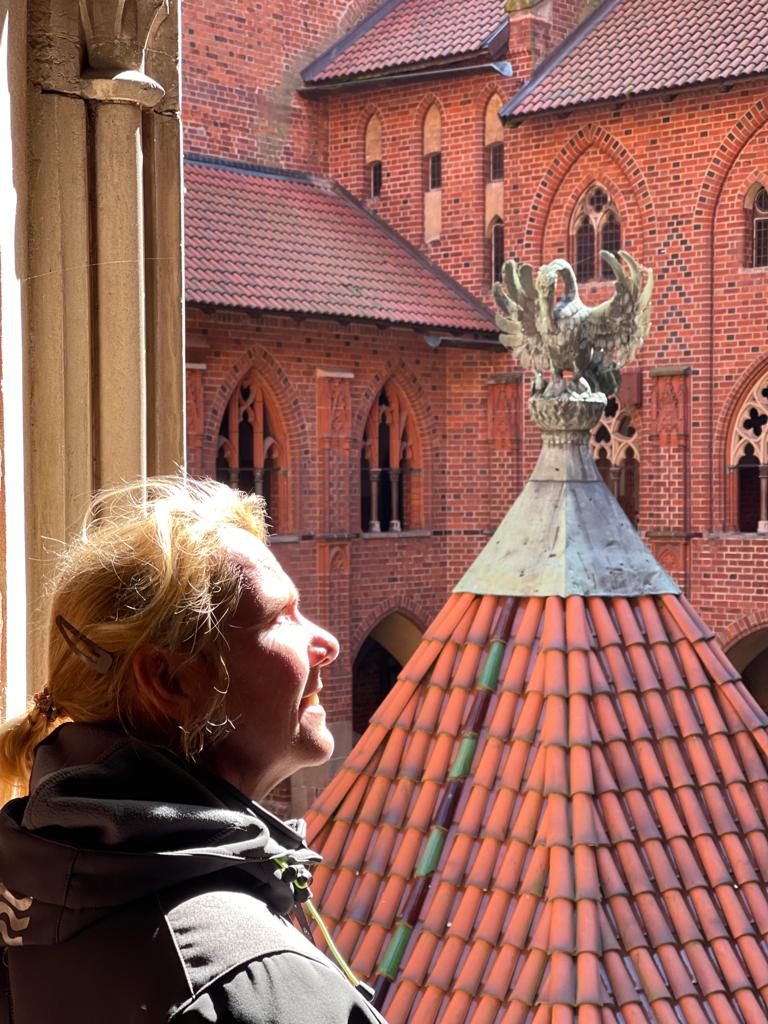
Our next stop was Malbrok castle, the largest brick castle in the world (half the size of Vatican city), built by the Teutonic Knights. They came to Poland (East Prussian at the time) and the Baltic countries to convert (mostly by using force) the tribes to Christianity. (Christianity is a strong part of Polish culture, 93% of the population is Roman Catholic). Malbrok is like the Great Pyramids of Egypt. Huge and incomprehensible to understand that such a structure could be built in those days, with the knowledge and equipment in those days. Fun fact was the large pelican statue on top of the water hole in the castle. A religious symbol I was not aware of. Its also the national bird of our island Sint Maarten.
Spending a good part of the day at Malbrok, we left at the end of the day to follow our route along the Baltic. The idea was to get close to the border with the Russian enclave of Kaliningrad. Just to figure out if it was worthwhile and possible to get in there. We reached the small town of Formbork, which surprisingly has an enormous cathedral (especially since the town has only about 2500 inhabitants). But more surprising that this is the town where famous astronomer Nicolaus Copernicus lived and died. This is the place where he developed the theory that the sun is not going around the earth, but the other way round. A major milestone in science and how we look at the sun today. His original planetarium is still there (part of the cathedral). Camping areas were limited in the area, so that night we parked at the little towns main parking, where curious towns people roamed around our truck just to figure out what and who we were. (Military, spies,ect). Mind you we were a couple kilometers away from Russian territory.
We asked around, but didn’t get a clear indication on crossing into Kaliningrad. So we skipped the plan. Drove off to the border post to get a glimpse of the Russian border guards (the closest we could get) After getting that little kick we decided to go around Kaliningrad and go in the direction of Lithuania.
Not planning ahead and skip research has it advantages. Main advantage is the surprise factor. On our way towards the Lithuanian border we came across a forest where a huge concrete bunker complex is located. It turns out to be the head quarters of Hitler during his invasion of Russia. He actually spent most of his time there during the entirety of the war. The whole top of the German Nazi regime lived in these bunkers, hiding from bombardments. Important decisions were made in these bunkers, which determined the course of the war and eventually caused the collapse of the regime. An historic event took place here, when one German officer tried to kill Hitler, which attempt unfortunately failed. (The movie Wolf’s Lair is about this event).
Though not the most logical site to put up camp, due to the late hour, we decided to spend the night at this dark spot of history. Trying to visualize the events which happened here when the day changed into a dark cloudy and cold night, I started to ask myself, if you have to hide yourself behind meters thick concrete walls, have people testing your food for poisoning and make camouflaged walkways to be invisible from the air, when letting out your dog, are you not realizing your are on the wrong side of history? Do those who have started a new war on the European continent, ever visited this place, and see what there final destination could be?
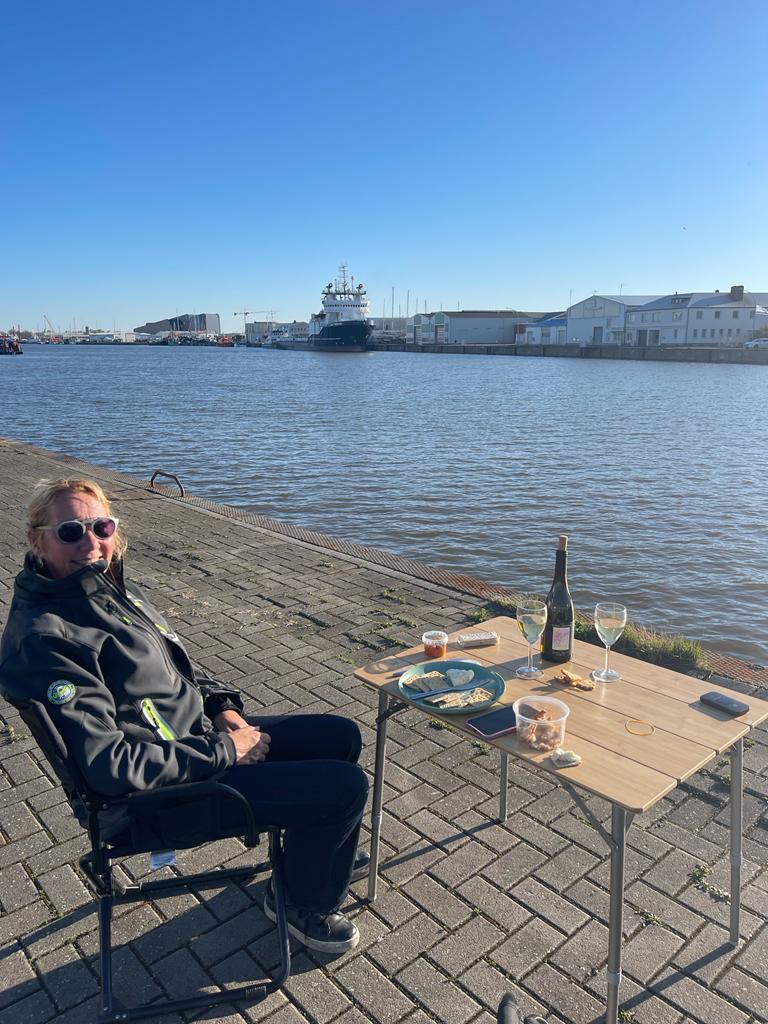
The first city camperparking experience. Bremer Harbor.

Camperparking at Wolinksi National Park Poland. Right on the beach for a great sundowner.
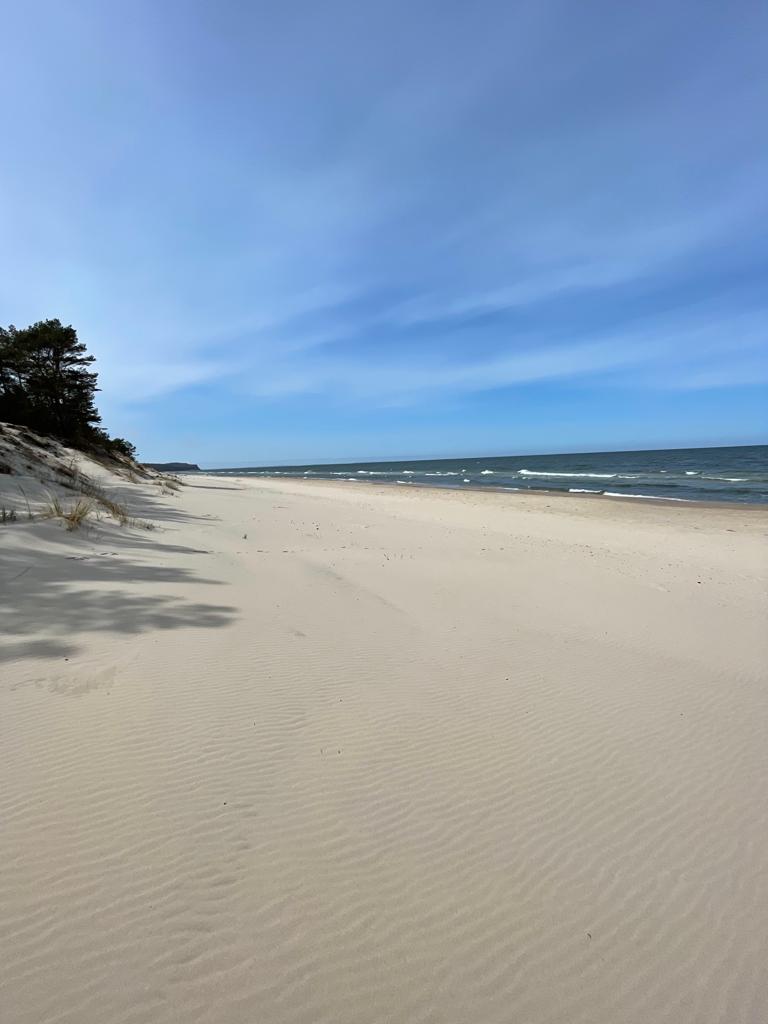
The unspoiled long sandy beaches of Wolinski National Park in Poland.