Crossing the border back into Saudi again, was the usual thing. On the Qatar side, there was again a friendly officer who guided us through and we got an escort again, this time to pass all the waiting trucks at the final check point. The Saudi border officials were also very pleasant, so we were back in Saudi Arabia pretty fast.
An official campsite for campers and caravans would be our next stop. We were there last year twice and it’s a good place to prepare for the crossing through Saudi Arabia. When we arrived there was nobody, so we could pick a nice spot. However, in the night the first local camper arrived and parked next to us (and there are about 50 other spots!). Normally not a problem, but the Saudi’s love their airconditioning and their campers or caravans don’t have the solar and lithium batteries we have. No, they run gasoline generators on the back of their campers. And they run almost day and night. So despite a nice and cool breeze (open windows), we had to close our windows (for the noise) and run our airco as it got hot inside.

Next early morning (Marja still sleeping), I moved the truck away from our new neighbor, to a more quite spot. Great thing of this camping (the only one of its kind in Saudi Arabia), is that each camper spot has a tap with unlimited water and a grey/black water disposal pipe. So we could do some laundry, cleaning and filling up the water tank.

During the day, more campers started to roll in and all had their generators running (some only at night). During the day when we were outside (doing our stuff, having our lunch and coffee breaks), most of our fellow campers (all Saudis) stayed inside their campers, watching TV, playing games or sleep. They come to life in the night, when its cooler. They do have a different life style. There was a very nice Saudi man, not far from us, who was by himself in a big American camper. He invited me to his camper to drink some coffee and eat mangos. Later during the day he visited us and brought a big bag with lambs meat. We got along really well, he had many nice stories about the Saudi life to tell us.
We stayed three nights and had all our jobs done. Clean truck, defrosted fridge and freezer (often, because of the climate, ice forms against the side inside the freezer and fridge, causing it to cool less and using more energy), watertank filled up and all laundry done. We drove to Damman (one of the larger cities in Saudi), to do some shopping, to stock up. There was only a small parking (the parking garage was big though, but too low for us). I had to drive over concrete dividers and almost knocked out the boom, but as usual, we got through. It was worth it, since the supermarket had a lot of nice fresh things (even Belgium andives and asperges!).
Damman with surrounding suburbs is big, and finding a camp spot was impossible for that night. We drove around a lot, even to an IOverlander spot in a public park. But since it was Thursday evening the park was packed. We enjoyed watching the crowd, it was so lively and fun! But no camp space for us….. A number of small islands in the Arabian Gulf are located near Damman. One (Abu Ali) was connected to the mainland and on the satellite map looked pretty empty. Night already fell and driving in the dark is not my favorite thing in unknown areas.
There were some big villas with support buildings, along a stretch of beach on the island, with big parkings. We parked in the far corner of it, near the last villa. About another 50 cars were parked near the villa and it seemed they had a party going on. Marja made some nice home made hamburgers for diner, and as we just finished our meal, some people called us from outside. Two elderly Saudi men, with walking stick and wearing their traditional clothing, stood below the entrance ladder. Of course the usual questions “how are you” and “where are you from” in broken English. They showed their admiration for the truck and were impressed with our journey. They now invited us to come in the villa to join the party. We doubted for a moment, but this was of course again a nice opportunity to see and experience culture and hospitality from close by. Unfortunately, before we reached the main house, we were separated again. Marja had to stay with the women and girls in another villa, next to the main villa.

When I entered the big villa, it was actually a huge room, with a large carpet on the floor and cushions along the walls. The room measured about 30 by 20 meters and all along the walls were men sitting and chatting with each other. You could see, these were not ordinary men. Their outfits, looks and posture, showed they were wealthy and important men (the villa and the type of cars on the parking said actually already enough). These men were important people, with authority. As they seemed honored to invite me as a guest, I was much more honored to be there. Servants were running around with food and drinks. Some of the younger men spoke English and they could explain me the purpose of this event. These men were all Saudi captains of industry (like management of Aramaco, the large oil company). The party was held for one of them, since he was going to marry. (Seems like they also do bachelors parties).
After a while (and getting cramp in my knees and back, from sitting on the floor), the main meal was ready. Since we experienced this before, I was afraid that this would not be different. As moslim ethics dictate, the most senior and important people go first (which includes special guests, which title I probably had). In a separate room, three big plates with a baked whole sheep were on the floor, surrounded with the usual things like, flat bread, a cola or sprite, yogurt, hummus and salad. Since I had just finished Marja’s delicious home made hamburgers, my appetite was not present, and looking at a dead carcass, where men were digging in with their hands, to rip off pieces of meat, I did some dipping of bread in the hummus. Unfortunately, the men at my “table” thought I was afraid to put my hand in the sheep, so they started to throw pieces of meat in front of me (there are no plates or cutlery). I had to eat the meat, which was actually pretty good. Luckily they had a wonderful dessert for which I found space for in my stomach. (The fact that all the guys dig in this big bowl of “creme brulee” with their hand, I took for granted.
Entering the room where you eat, you take off your shoes (the Arabs wear easy sandals, which sets me back a couple of minutes every time when I enter or leave the room, because of my hiking boots). After the meal, all the men go to the bathroom and start washing themselves as if they just came from a mud-wrestling match. Even though the men were all of high esteem, are educated and are civilized in the way I see it, this whole diner thing with goats and sheep and the washing session, still looks strange to me. However, I think that is because of the wrong way I am looking at it. It’s definitely a way of sharing friendship and bonding with each other, which by itself is of course a beautiful ritual.
After “my group” left the room to wash, the next group of “less imporant”, and junior men entered to room, to eat from the same carcasses. And after they had left, the young boys came to eat from what was left over. (Young boys join this parties, to learn the habits, the men and the rules of life. At the same time, they are monitored by the seniors, to see who the future leaders will be.) In the Arab Moslimculture, family and tribal bonding are important for the survival of the group and the group status.
At the end of the evening, the real last left overs are then eaten by the servants. Yeah, different country, different culure.
All the time, Marja was with the ladies in the other villa. She was with about 40 ladies and girls. As she had seen before, the women were all beautifully dressed (some even a bit sexy), with high heal shoes, beautiful makeup and jewelry. A 15 year old girl spoke perfect English and Marja had interesting conversations with her. Contra to Western believe, many Arab women choose the way they live. Accepting that they could be one of the four women a man can marry, dress covered up partly or completely when being in public. It’s actually what you grow up with, what you are used to, what you see around you, that determines what kind of life you live and whether you are feeling ok with that. This group of women was having a fun night, lots of nice food and many snacks, dancing and singing, and the room they spent the evening in had many couches, chairs and tables, very comfortable. And for dinner Marja was offered the use of cutlery. All in all, for both of us it was a very enjoyable evening, it was an honor to be able to be part of the celebrations.
After this amazing evening, we said goodbye to our new friends and rolled back in our truck for a good night sleep.
We doubted for a while if we were going to cross Saudi to get to Jordan. A new war between Israel and the Palestinians just broke out and at the same time anti-western sentiment was on the rise according to leading news sources. Though the anti-western sentiment was mainly focused on the US, we doubted whether people with bad intentions would make a difference anyway or that they would consider us same as Americans. In Saudi Arabia, we didn’t see any signs of the war. People were not talking about it, didn’t see Palestinian flags nor any protests. Some people even carefully told us, that they are not choosing the Palestinian side in the conflict, but no side at all. Still being in a country, which not long ago had a problem with interior terrorism and attacks on foreigners, we were careful and took time to decide. And after all, Jordan is closer to the area where the fights are happening.
At the end we did decide to go, cross Saudi and go into Jordan. Our motto was and is, don’t always believe what is told by the press, discover the truth by yourself, find out what is going on by going here or being there, and listen to the people.
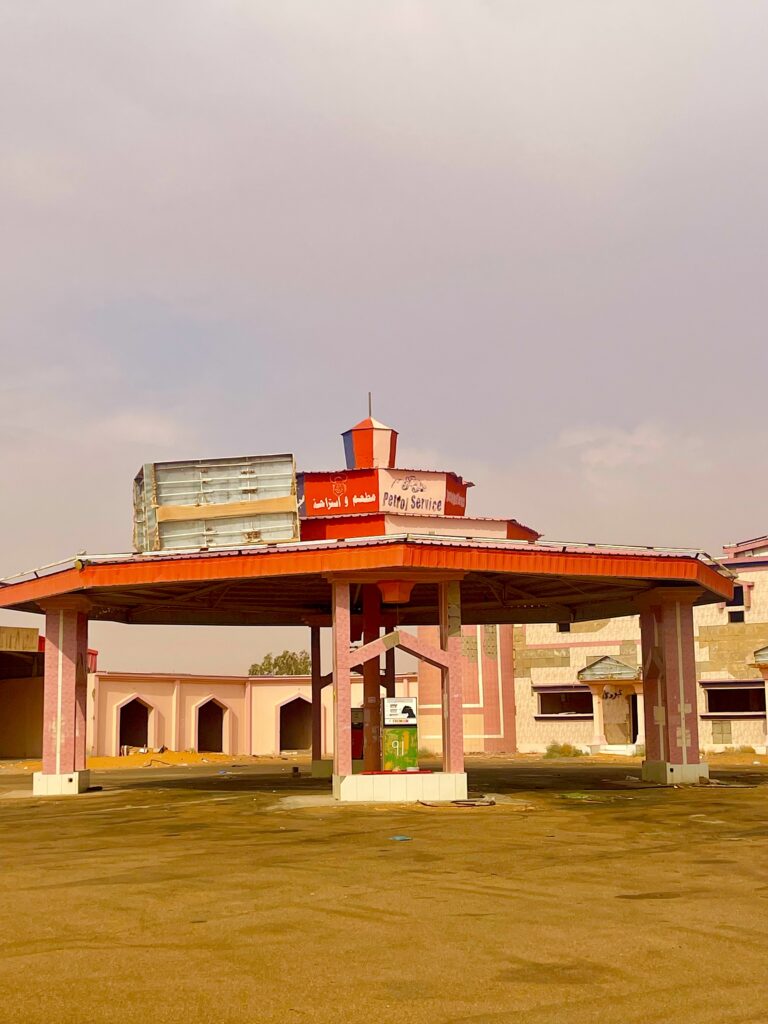
We would cross again Saudi from east to west. We left the populated areas on the Arabian Gulf and went into the fast empty desert plains of northern Saudi Arabia. We choose to drive the less used roads, because these areas are so beautiful, (which often meant more kilometers), which often were dirt roads through very pretty desert landscapes. These areas being less populated and having less traffic, also meant that 9 out of 10 gasstations we passed, were out of use, completely abandoned. Despite starting with two full tanks which would give us at least 1500km, we still had to be careful, not to miss the one gasstation which would be open and had diesel.
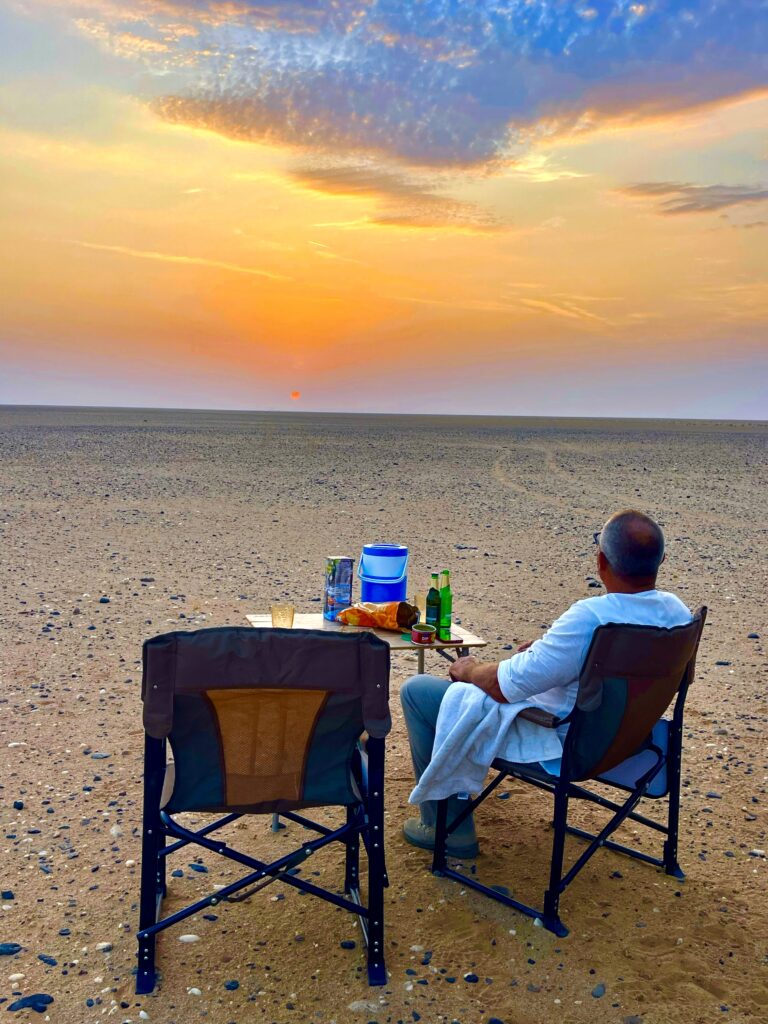
After the first 400km we made a stop in the middle of the desert plains. With a 360 degree view of only horizon. It was all flat land with nothing sticking out above the ground, except for us. During the day we saw already big clouds starting to form above the desert. Of course, it hardly rains in the desert, and when it rains, it rains and with a lot of noise. When the night set in, we saw the first lightning, but didn’t hear the thunder, so it was still far away. Being in the open like us now, with nothing else high around us, would be the perfect spot to be hit by a lightning strike.
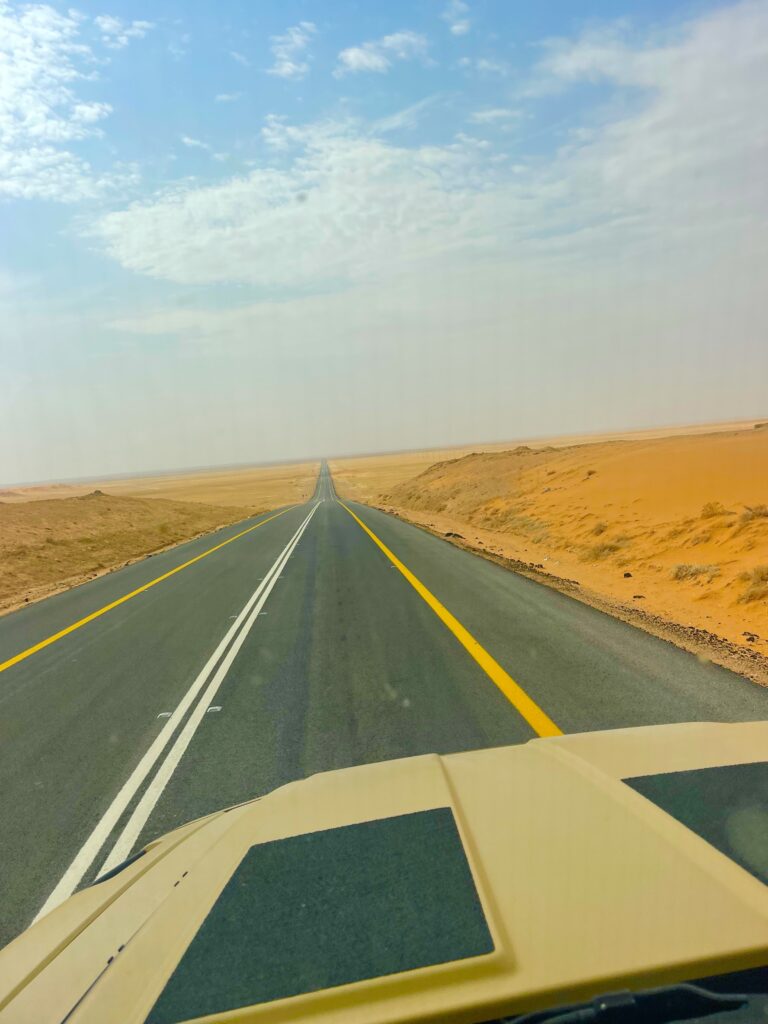
Next day we drove another 500km and crossed the North Reserve, which is part of the King Salman Bin Abdulaziz Royal Reserve. The North Reserve is set up as area for sustainable hunting. The hunting done here is with birds of prey. These birds hunt on small mammals and little birds. Hunting with birds of prey is a well founded in the Arab culture, especially on the Arab peninsula. We met men who were catching birds of prey in the wild, which they then sell to hunters, who then further train these birds for professional hunting. The men who catch this birds of prey, use cages with little desert mice in it. On top of these cages are little wires with loops. Once the bird of prey lands on the cage to get the mouse, his feet get stuck in these ropes and he then can’t escape anymore.

After another night in the desert, we continued driving on deserted roads. The landscape started to change and more mountains and rock formations appeared. We also saw the first bedouin camps moving to their winter grounds. Large old Mercedes trucks towing enormous mobil homes. The season was definitely changing. Clouds were packing above us more often and as we had a camp spot on a small hill, I closely watched the weather. Then the lightning started, left, right and in front of us. Still no thunder, we were still safe, but the intensity of the lightning worried me. Marja was busy cooking dinner, when it suddenly changed, lightning was followed by a big noisy thunder. It was time to move to a safer spot! Marja had to pack up quickly, store everything away. Within minutes we drove down the little hill and in the darkness of night with our large beamer lights on, we drove towards the highway through the thick sand, hoping to find an area with other high objects. We reached the high way and drove to a nearby small town and parked between a mosque and the fire station. Safer than that was not possible!.
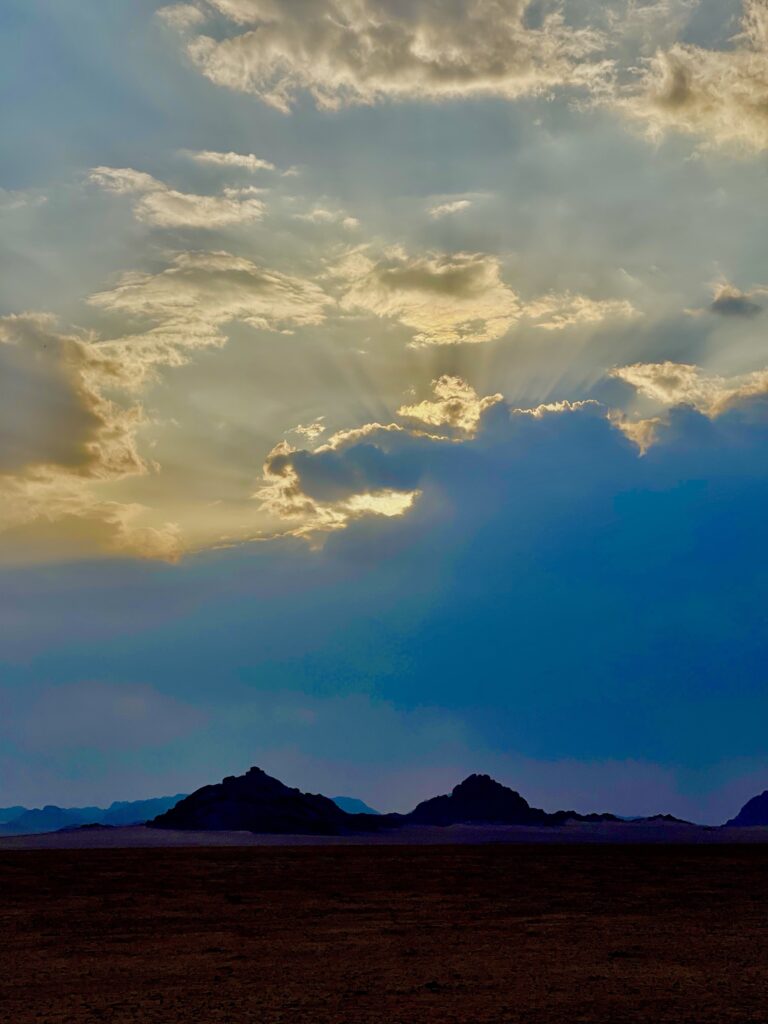
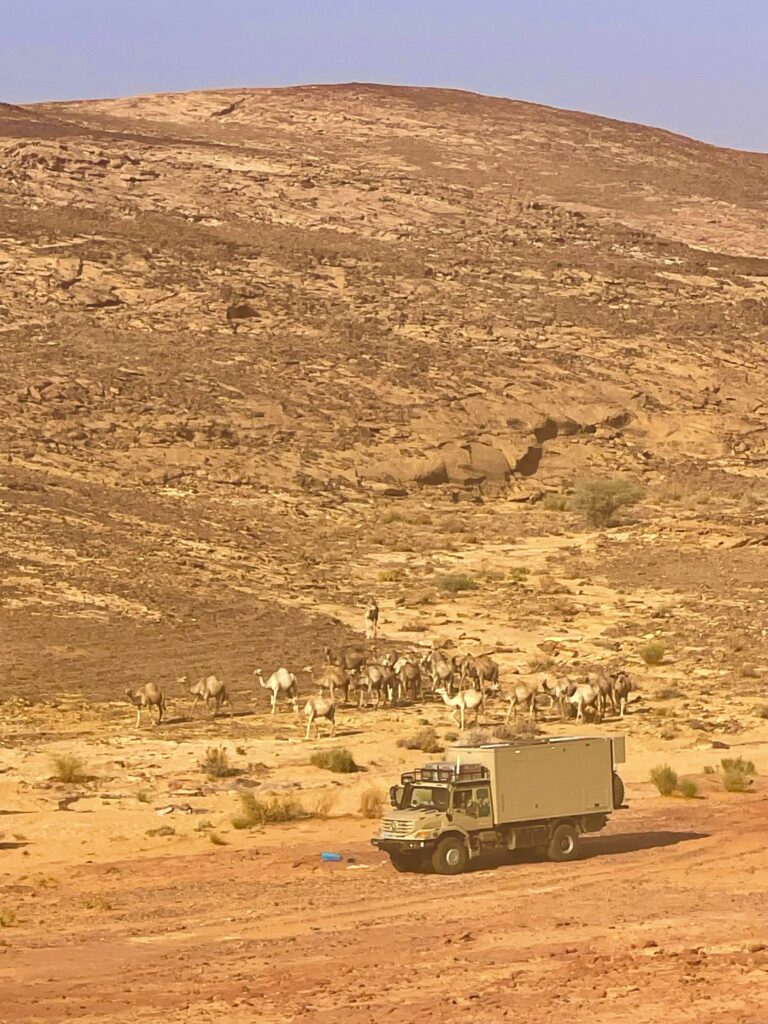
Waking up with a bright blue sky, was a bit strange after so much thunder and lightning the night before. It didn’t rain, most probably somewhere else deeper in the desert. We had one more day to drive to the famous tourist town of Al Ulla. A place where we were already, earlier this year. But with our way of traveling, often making diversions and always having our long morning coffee break, we stopped a couple of kilometers before we reached Al Ulla. Again we diverted and drove deep into a wadi. A pretty rough track with deep sand, hard rocks and rock shelves. We drove as far as we could, until it became unsafe to drive. The Al Ulla area is known for its beautiful red sandstone rock formations, which gives you the impression you are on a different planet. Strikingly beautiful! We hiked for a couple of hours through this magical landscape. During the morning a herd of camels was passing through the wadi, close to our truck.
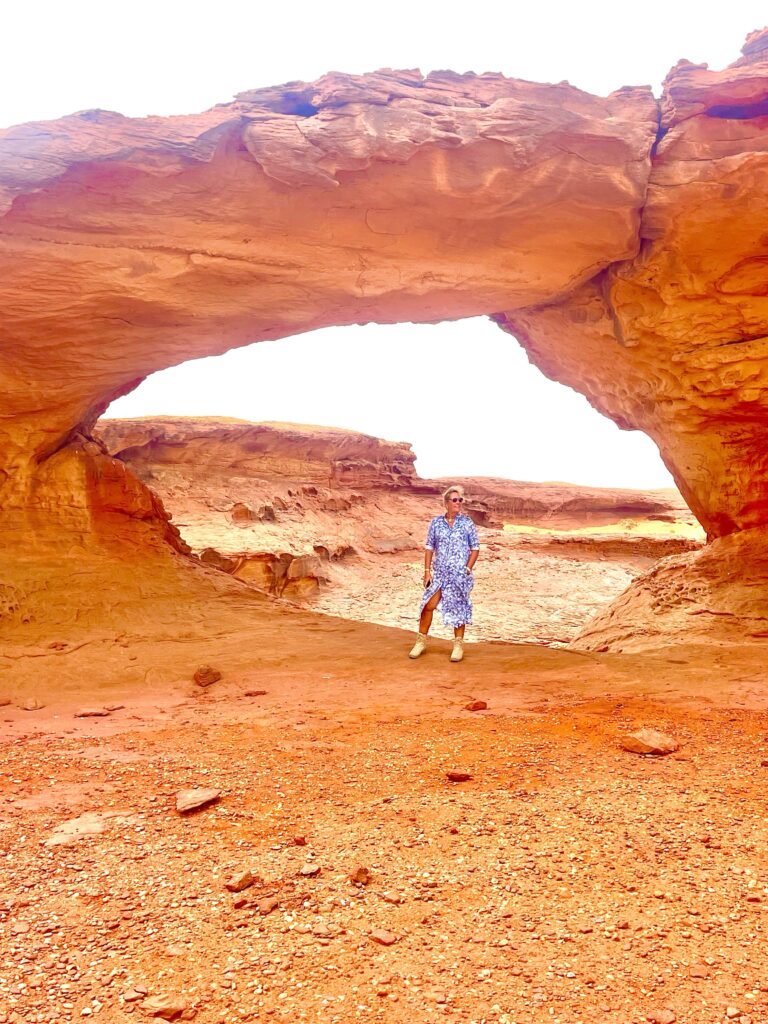

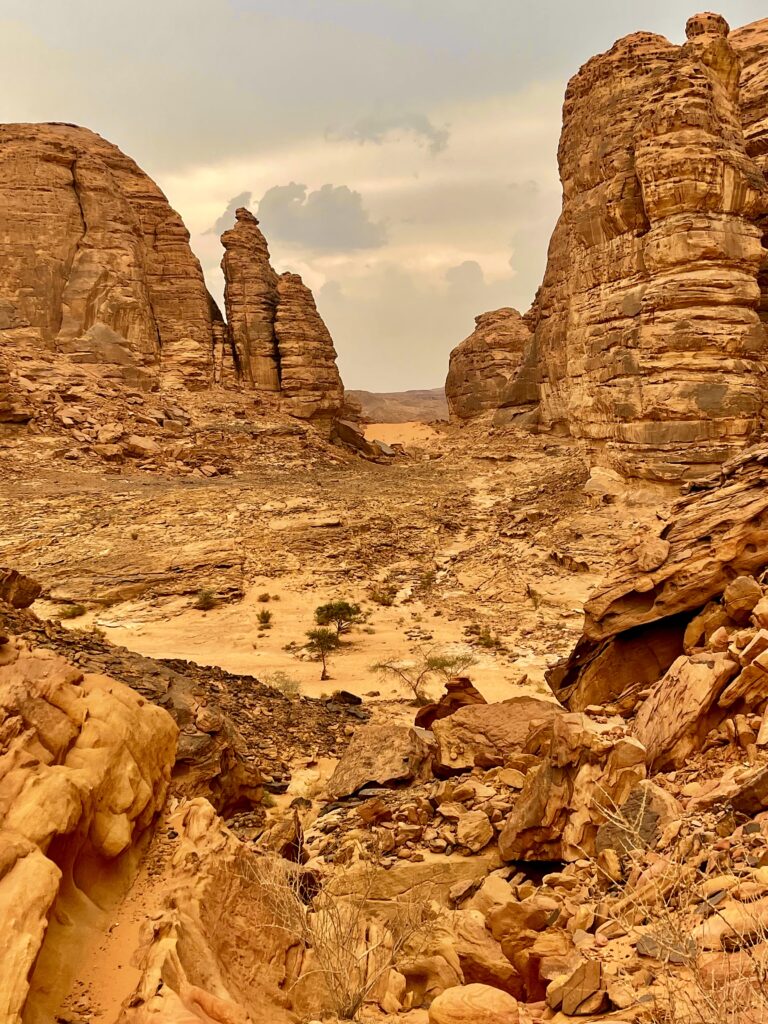
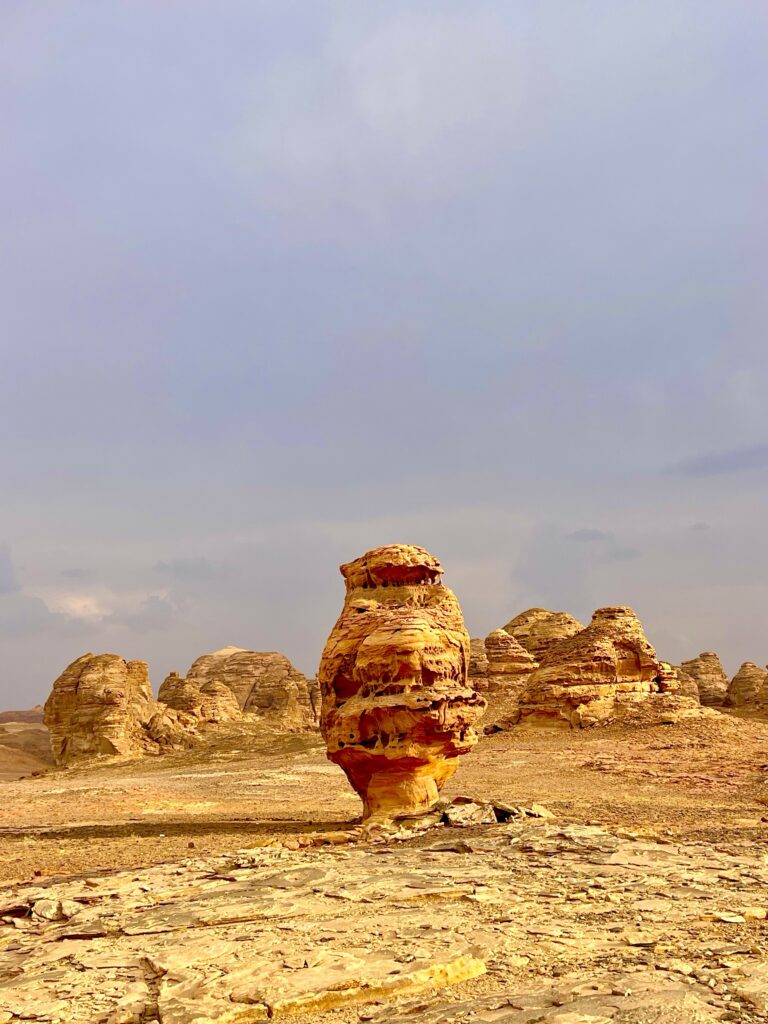
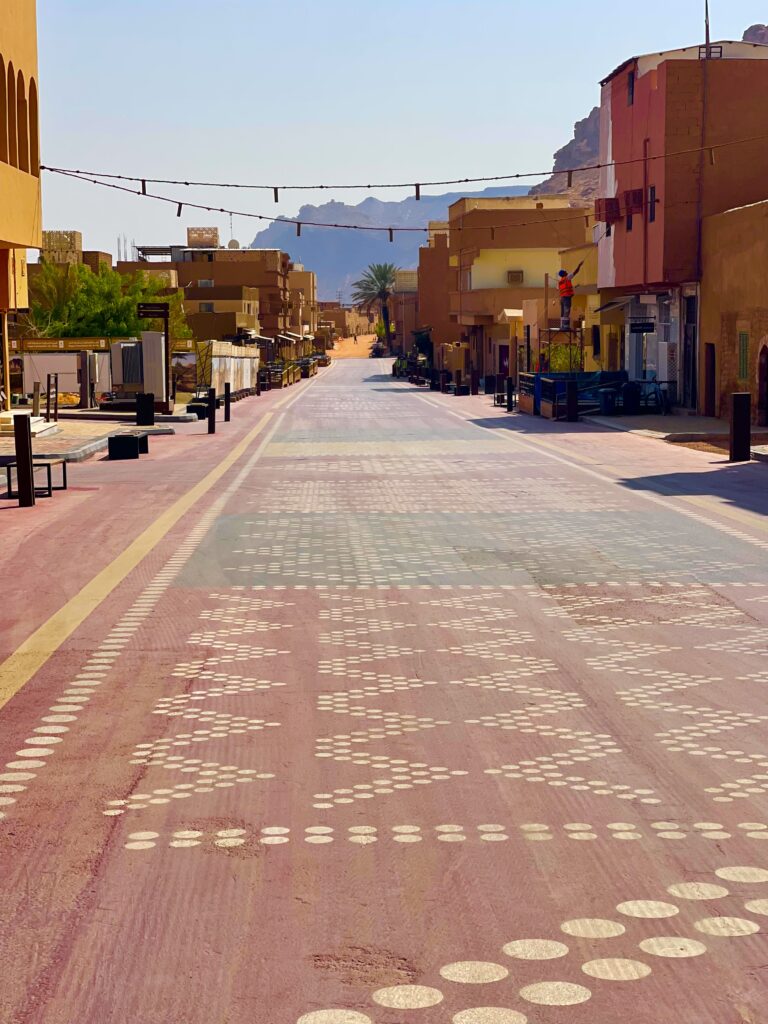
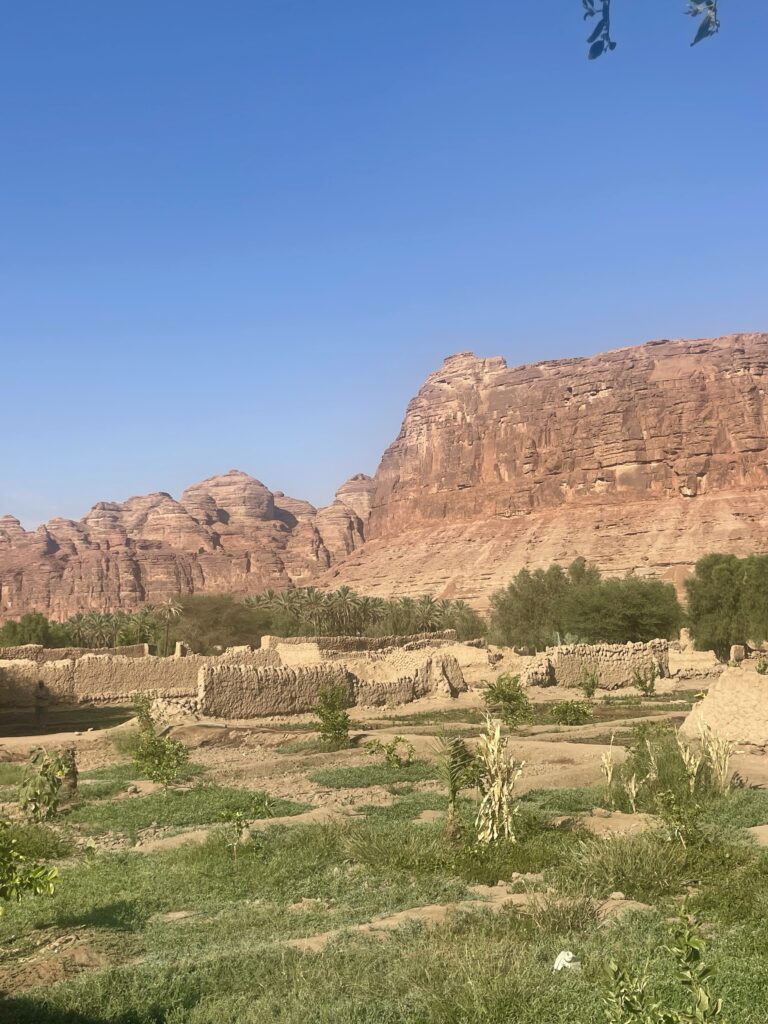
Al Ulla is the main tourist location for Saudi Arabia (for now). The town of Al Ulla is surrounded by archeological sites, the old town itself, desert hotels and the huge Sharaan Nature Reserve. Although it was already the end of October, it was very quiet in Al Ulla. Many shops and restaurants were still closed. Maybe it was still too hot. Or maybe, tourists held off due to the security situation in the Middle East (as news outlets usually indicate the Middle East as one “country”). Last time we didn’t realize why Al Ulla used to be such an important town. The town itself is built on a slight sloping hill side and below is a labyrinth of raised dirt walls, surrounding small agricultural fields. Al Ulla is rich in water and vertil soil. For centuries people lived here in a desert climate, but with rich resources of food. Al Ulla was on the famous camel caravan routes from north to south. Till today hundreds of (Pakistani) workers, work on these small fields, like nothing has changed. Managing the flows of water through the small channels, planting seeds, removing weeds and harvest the fruits and vegetables. The gardens look like an oasis (which it actually is). By 2030, the entire Al Allu area will be ready (new developments and restoration of the old town), then Saudi will open up for the masses. Al Ulla has already a brand new airport, with direct flight connections to many countries.

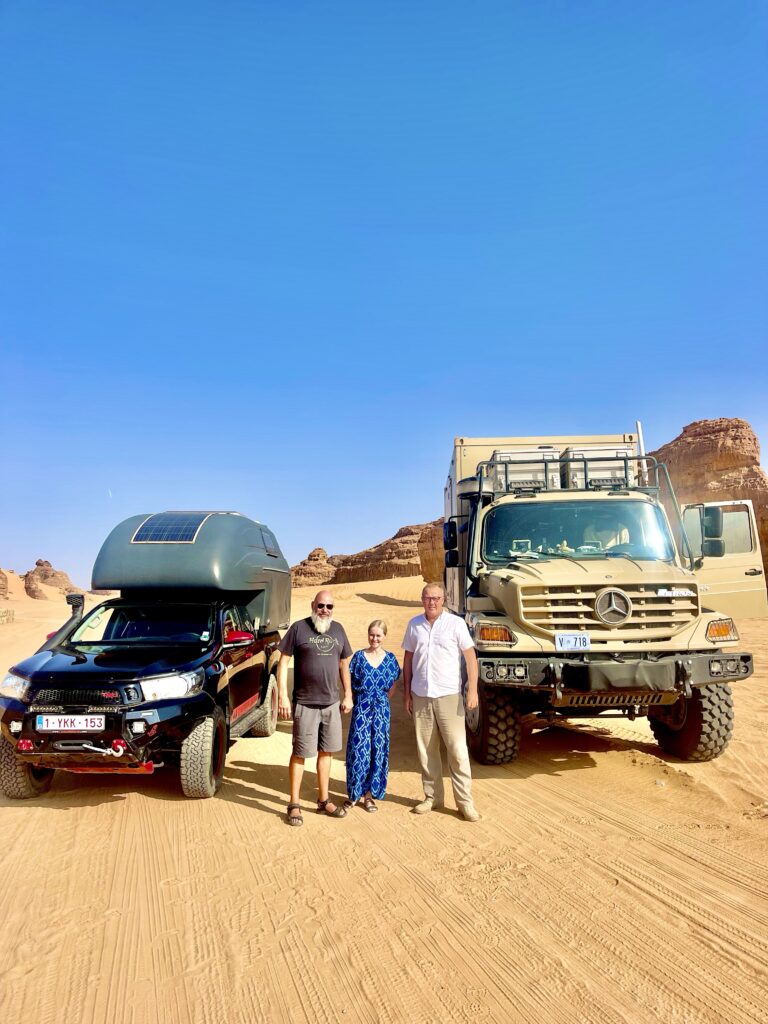
The next morning we woke up at the Elephant Rock, our favorite spot in this area. The moment we drove away, we met the first overlanders, since we were back on the road. A Belgium couple with a Toyota Hilux who had already crossed through some unusual countries (Dagastan, Tsetjenie ). We had a nice chat and we heard they had not seen many overlanders or westerners for a while (and for sure no Dutch speaking ones). A tsunami of adventure stories was flowing over us……but nice stories and they had to get their stories out.
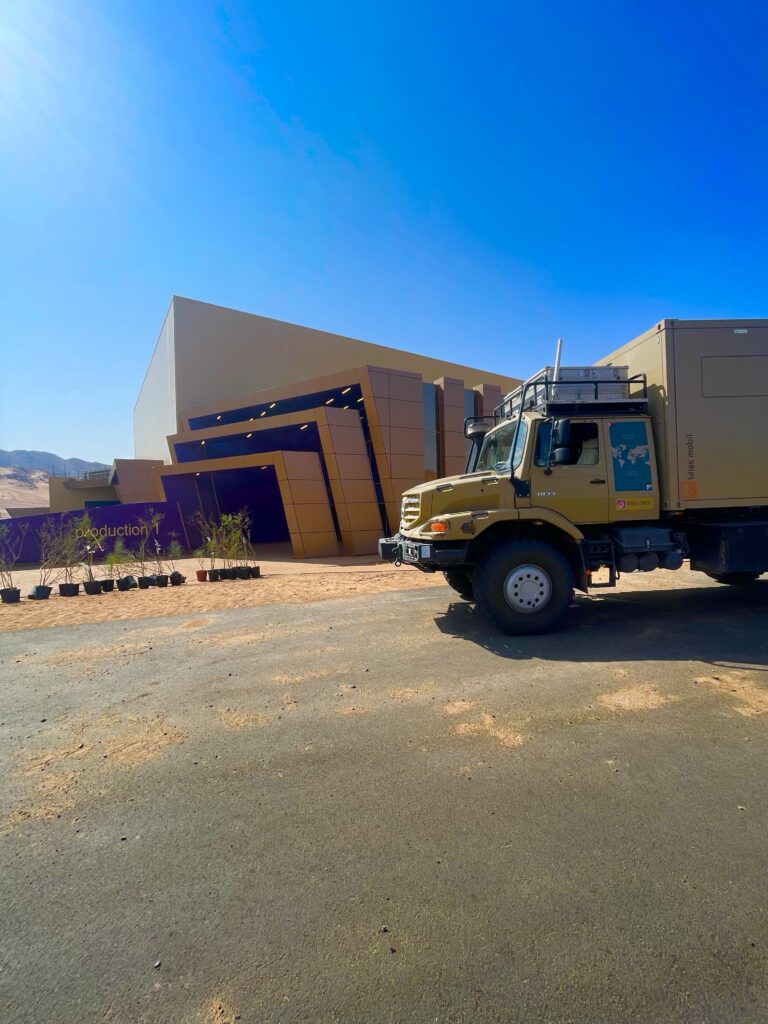
The Red Sea coast was our next destination. Going through the mountain areas we crossed another project of the Saudi Government. In the mountains, a large film studio complex had just been completed. Due to its amazing sceneries, the areas around Al Ulla are often used as film locations (also for international productions). Saudi wants to become a major player in the film industry, which has for sure a great potential with locations like Al Ulla.


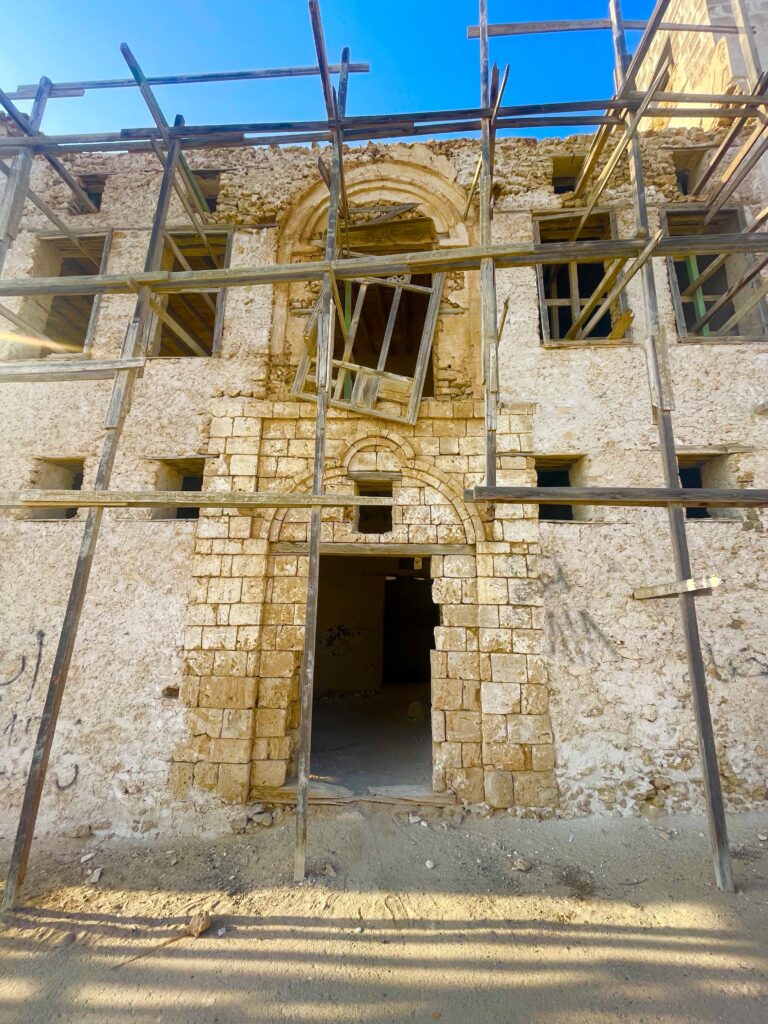
The first city we reached at the Red Sea coast was Al Wajh. A former Ottoman strong hold, which was captured during the Great Arab revolt and proved the Arabs that they could defeat the Ottomans. It was the start of the fall of the Ottoman Empire. Old Ottoman buildings and and Ottoman fort are being restored now. It shows the beautiful and well designed architecture of the Ottomans, like we saw along the Ottoman Hejaz railroad. Al Wajh also has a nice boulevard (the Cornich) along the Red Sea, where we spent the night.

Al Wajh is the starting point from where we drove along the coastline. Accidentally we entered a huge construction site. Since it was Friday, there was hardly anybody there and even the security didn’t notice us. At first we did not realize we had entered one of the super projects at the Red Sea, part of the Red Sea Project. An enormous project, divided into a number of other projects, related to real-estate and tourism development. The project we drove through was the Triple Bay project. The construction of three ultra luxury hotels at three gorgeous unspoiled turquoise blue bays, with dramatic steep mountains at the back. Huge infrastructure projects are ongoing at the same time to unlock the area. The plan is to construct 16 hotels in this area.


Hundreds and hundreds of trucks and excavators were parked all over, waiting to get back to work the next day. We were lucky that we passed today, to see all the beauty of the natural environment, before it will all be gone in the name of progress and development, but also to experience the magnitude of the project. After we passed the last pieces of equipment, we had to go to the mainroad again, but not before we even saw a lot more of the construction site. Huge concrete and prefab plants where constructed outside the construction area, to supply materials needed for the construction of the hotels. We now also passed the heavily guarded main entrance gate. For sure we would not have been able to see all what we saw that day, if we had tried entering through this gate, simply because we would have been refused to enter. We found the magnitude of the works extremely impressive!
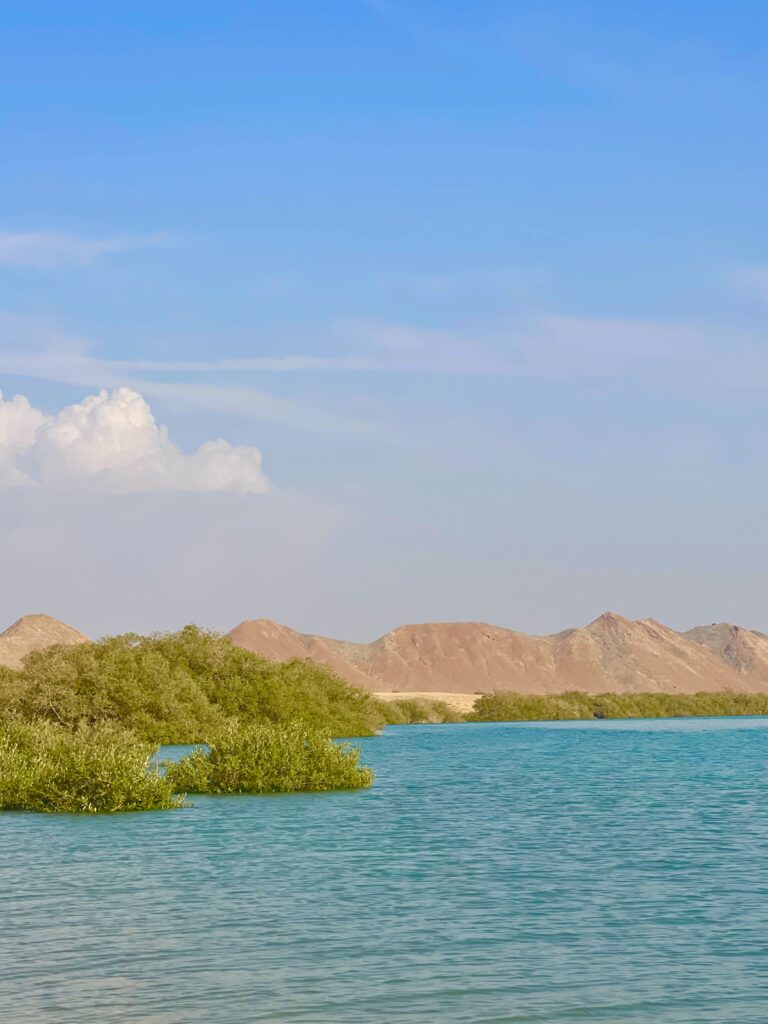
From the main road we quickly went back on a side track through a wadi. We had to drive slowly, since it was one of these wash-board tracks, which makes the truck shaking like hell. At the end there was an island, surrounded by a mangrove forest, the first forest like this we saw at the Red Sea coast. We drove along the lines of mangroves when we were overtaken by a border guard jeep. Two young guys with ragtag uniforms and missing or brown teeth, asked us the same questions and told us explicitly that swimming was not allowed. They were nice and friendly and of course curious. Besides, these guys and many or their colleques, are sitting in their jeeps along the coast for hours and days in a row, to avoid people illegally enter Saudi or to make sure people do not go swimming. At many of these positions, for days, nobody is passing by, making it a boring and sleepy job, I think. Sometimes we pass these jeeps and the guards inside are completely passed out.
At a certain point we found such a beautiful piece of beach with a few mangroves and a great view over the sea and the mountains, that we made it our camp for the day. The same border guards passed by again and confirmed that we were allowed to stay for the night. We knew they would park somewhere out of sight during the night, but still able to watch us. Tourist safety or distrust? We leave it in the middle, but at least it gave us extra secured feelings.

The road along the coast of the Red Sea is a dirt road, mainly used by the border guards to do patrols. You can usually hear them coming, since most of their cars make all kinds of cracky noises due to the extensive use on this bad bumpy and rocky road. Still it’s the best way to see the beauty of the Red Sea and its coast (instead of driving the tar road a couple of kilometers land inwards). Due to its remoteness, also here we frequently saw birds of prey like the Egyptian Red Sea Eagle. We also found piles of huge empty Oyster or clamp shells (Horse Hoof Clamp), left behind by fishermen or poachers. Giant clamps are a highly priced commodity, for the shell itself (for collectors and as home decoration) as well as the living animal holding the 2 sides of the shells together. (It is a highly appreciated delicacy in Asia). Unfortunately, these clamps are becoming endangered now.


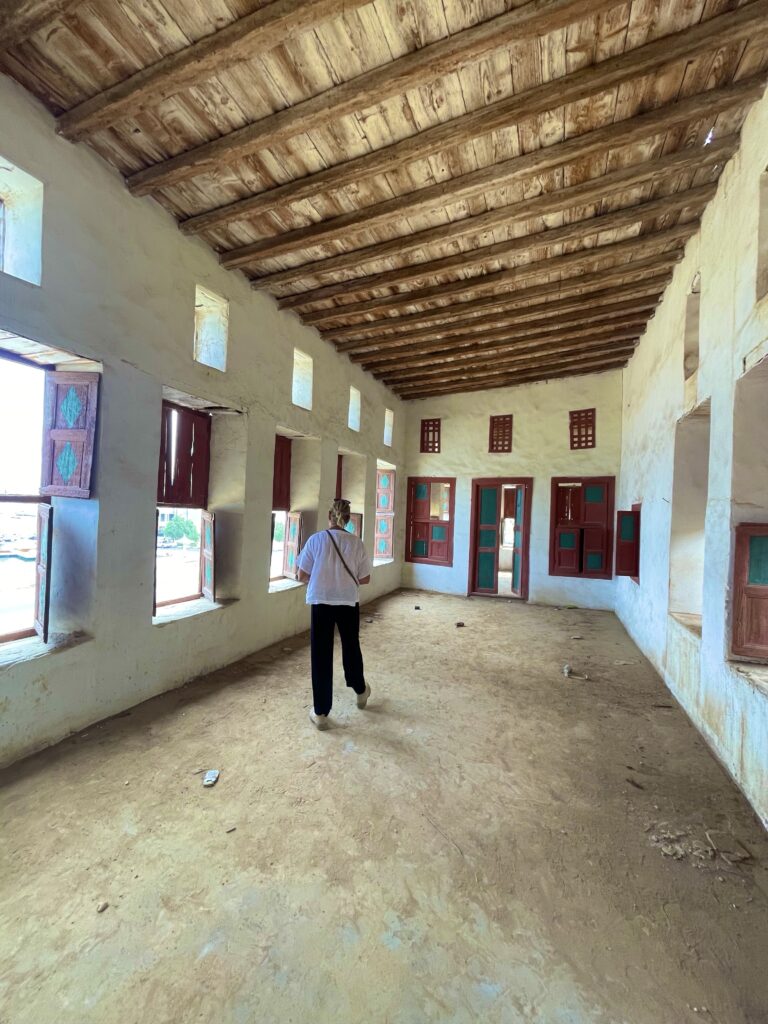
Unfortunately , this road also had an end when we reached the city of Dubba. Also here we saw remnants of the Ottoman period. An old part of the town, which once was restored as monument, was now in decay. A large old mansion, overlooking the small harbor, was full of garbage and grafitti on the walls. A lot was damaged by vandalism. Despite all the efforts and haste to get Saudi Arabia ready for tourism, not all population follows suite (yet). The town itself didn’t feel good. It was (despite being in the Red Sea development zone and even within the MBS Royal reserve), as if the city was left out. There were young men with long wild beards, who might have been from outside Saudi, who looked angry at Marja and turned around to talk about her (probably because she was not dressed like moslim women). Not a place to hang out longer, so we moved on and headed for another familiar place, the wreckage of the old Catalina Seaplane.

From here on, the Red Sea coast was off limits, due to the huge Neom project, which I described in an earlier article. The road towards the sea-plane, which lays on the “bend”, Red Sea/Gulf of Aqaba, was full of trucks, on the road as well as next to the road. Since our previous visit, a lot more small support projects had started or were completed. Cement factories, telecom installations, pre-cast plants, etc. The main project within Neom is The Line, which is that huge city, consisting of one building, with a length of 175km, a height of 500 meters and a width of 200 meters, which in the future will be the home of 10 million people. For now, they are still digging and hammering the terrain, to make way for the construction of the foundation, so not much could be seen yet.
We arrived at the location of the sea plane wreckage at Ras Alsheikh. Last time we were there with our fellow overland travelers, Bodu and Regina. Now there were many large dump trucks parked with Asian drivers, making use of the tourist bathroom facilities. The privacy was gone and it didn’t feel special anymore. We also found our new overland friends again, the people from Belgium (Filip and Roksana) with their Toyota Land Cruiser. They were almost surrounded by the dump trucks, so we told them to move away and follow us. They were told that where we wanted to stay, it would be flooded when the tide would rise. However, we had experience from the previous time and told them that it was fine to park there. It was nice they followed us, because now we spent a whole long night together with them. (And as if I knew in advance, we bought a lot of extra beer, alcohol free, just in case) And even though it was alcohol free beer, you can’t make Belgium person more happy than with an ice cold beer!

The morning we also took our time. We had breakfast together and by the end of the morning we said goodbye. They were on their way home and were going in the direction of Kuwait. From here we were able to go along the coast of the Gulf of Aqaba, driving the dirt road of the Border Guards. This is one of our favorite roads, with beautiful sceneries, turquoise water and many bays. At a certain moment you reach the little town of Magna, where we also ended up last time. Now, just before we reached, there was a security checkpoint from the Neom security police. You need a permit to proceed, but in the town there is a road which takes you of the coastal road and brings you back to the main high way outside of Neom, to go to Aqaba in Jordan. I was able convince to officer that that was our intention and that we had no other business. It turns out that the whole town is being demolished and that the inhabitants left to go elsewhere, this because of the Neom development and the new high way being constructed rolled over the town. We still tried to follow the coastal road instead, since it would save us over an hour and a half to reach our next camp spot.


We reached the point where we were sent back the last time as well. Now it was guarded by the military. Behind the barrier another big Neom project is in progress in one of the most beautiful wadis of the world. This is the Leyja project a set of three extremely designed adventure hotels, built against the steep cliffs inside the valley.
We drove back to Magna and took the road which would bring us to the highway. In the meantime thick clouds were packing together and the first thunderstorms were visible. Driving on the highway, we were surprised by an enormous downpour of rain. Police directed trucks off the road, but probably thinking we are military, we were left driving the road. It’s funny how the people here react when it rains. They park their cars along the high way, make pictures or videos of small temporary streams and waterfalls or drive dead-slow with their big SUV’s (it looks like not knowing how to react on a wet road). Driving with open windows, hanging out of their windows and yell to each other as if they all won the lottery. Well, we are used to driving in the rain, so we continued full speed, since we tried to reach our destination before night fell, before dark. Luckily I remembered a brand new road, which would cut or detour by half. However, now it was more or less blocked and had multiple signs of “Road Closed”. There was also a boom and a guard. However the boom was open and the guard was a bit away from the boom (waving with his arms, so I greeted him back). Since the weather was bad anyway, I didn’t expected a pursuit by the guard or anybody else, so we could drive this road to its end. It was already dark when we arrived and also here, at this “tourist attraction point” the privacy was gone. The spot is a tourist site with an old shipwreck, which we visited last time as well. And yes, here too where multiple trucks now and the drivers were using the bathroom facilities, and paying close attention to us, especially to Marja.

Some of them were very nosy and even the fact that we were sitting privately on our chairs, just outside the truck, they hang out too close, to look at the truck and……..at us. This was a group of four Afghan truck drivers, who didn’t speak English but tried to communicate with us and had a particular interrest in Marja. Mind you, some of these guys have not seen a western women in their life and for sure not covered up. Besides, these guys are away from home for a long time and with the lack of “free” women and girls in Saudi Arabia, you can have an idea of what goes through the mind of these guys. Anyways, it started to rain again, so all of us went back in our trucks, to stay there for the night.
In the morning all trucks were gone, back to work. We spent the day at the shipwreck. People came and left during the day and by the end of the day we had an amazing sunset, with the sunlight playing with the clouds. Some people came to picknick on the shore. Some came to us and offered us food (roasted mais), coffee and sweets. All nice and friendly Saudis. The same truck drivers from the night before came back as well. And again passed by. From what I understood is that one asked to other to ask me if Marja was just a friend (since we don’t wear our wedding rings when we travel) and if so if he could get her. It didn’t look like a joke, but a serious question. Seems like decades of US presence in Afghanistan didn’t teach those guys about women’s rights. Later that evening one of the guys was watching us from the darkness into our door opening. When I switched on the flood lights, he walked away. Later I saw him walking with big knife (though I knew they were busy trying to catch fish), I didn’t feel comfortable, so we stayed inside the camper that night.

The day arrived, we would finally enter Jordan. We had to drive another hour, and fill up our diesel tanks (Diesel in Jordan is four times more expensive), before leaving Saudi. We knew Jordan would be a different experience from all the Arab countries we had visited by now. But the best way to know more, is to experience it yourself. We were ready and looking forward to it. Although it was tough to leave the comfort, friendlyness and safety of Saudi Arabia…….

